Ore, at least there used to be. Pun definitely intended. Well, after leaving Wernigerode I went just a little further west to the Imperial City of Goslar. An important historical town in Germany’s history. Wars fought for control of the town, and control of the nearby historic Rammelsberg Silver Mine. Goslar is a very old medieval city, and just south is an ancient ore mine with over a thousand years of history. I could be mistakes, but from what I remember there has been ore mined from the surrounding Rammelsberg Hills (part of the Harz ‘Witch’ Mountains) for about 3000 years by early peoples. But it wasn’t until the legend that in the year 968 a knight named Ramm tied up his horse in the area, and a short while later the horse started rummaging around the dirt exposing a shiny metal vein. Long story short, since then, the mine was opened by Cistercian monks, and has been continually harvested nonstop since then until the late 1980’s when it finally ran out of metal and closed up after over 1000 years. In 1992 it was reopened as a museum and visitor attraction for visits through the mine. The main ores harvested were lead, copper, tin and zinc. There was a small amount of silver, and an even smaller amount of gold. What was cool about this mine, unlike the salt mine in Berchtesgaden, pictures and videos are completely allowed, so I got some good ones. I ended up getting to the mines a little after 12, after exploring the old town of Goslar a bit. Now Goslar, while an old city does not have a ton of the old gothic, medieval/half timbered housing vibe that Quedlinburg and Wernigerode do, though it still has some of those. I got some tickets for 2 different tours, one that which takes you down a lengthy train ride, hunched and scrunched in old train cars that the old miners used to ride in, and then a bit of an interesting tour through the “ground level” tunnels, where the guide shows off some old fashioned, and more modern drilling equipment, starting with old hand held drills from the early 1900’s to more modern large scale electric drills, to the newest electrically detonated explosives, and he does a demonstration of them with the actual equipment… minus the explosives part. The second tour I took was to an old lake used for turning large water wheels to lift up heavy buckets of ore to the surface, which takes you deep, deep underground, not at surface level like the first tour.
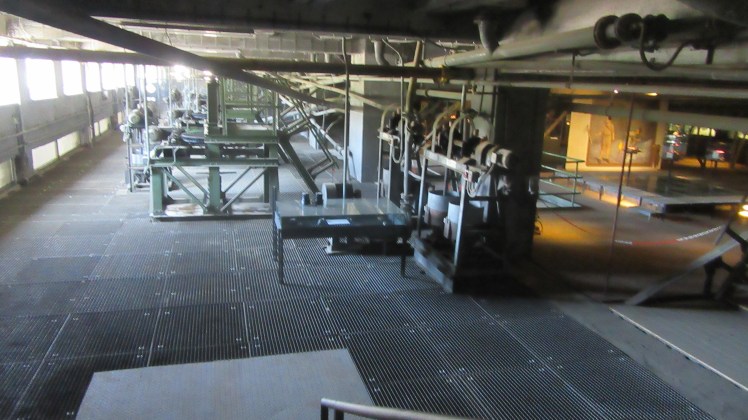
Well, before the first tour (I had about an hour and a half) I went through the old ore processing center used in the 1900’s to refine all the ore. It is a large series of giant tanks, or vats with big things that spin in the middle mixing and stirring dirt and ore I believe, could be wrong though all the signs were in German. But each giant tank had cool displays and old images. Up above is a large display of some paintings, and lots of displays of large chunks of ores, metals and stones directly from the mine. I ended spending about 5 hours here, which is about 3 hours longer than I expected, and by then it was already pretty late, but I did another walk through the old town to see some stuff. It was also the first day I had to use my umbrella for longer than 5 seconds. It was either bright and sunny, or it was cloudy and rainy, there was virtually no inbetween. It was also very cold and windy all day too! A complete shock, as almost every single previous day has been burning hot! Lots of pictures today, as well as a couple videos, which are mandatory viewing. Throughout the tour you have to wear helmets, which I thought were just kind of a fun thing, like the suit in the salt mines, but wow, was I wrong! I also just love the name Rammelsberg. It sounds really cool. Unsurprisingly as well, statues and works of art were hidden within the mine during WW2 to prevent destruction.
But before that, it’s time for German City with a goofy name! Today’s city is: “Rot an der Rot.” (Red on the Red [Abbey])
I also put a heck of a lot more images in this post than probably any other, so enjoy!
Glück auf! That’s the way miners greet each other in Germany, wishing for good luck in finding big veins!
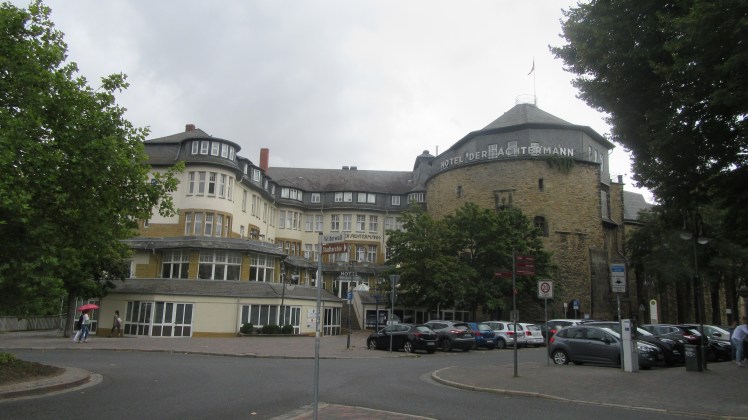
Gettin’ pretty busy up in there!A neat hotel in town, but not mine.
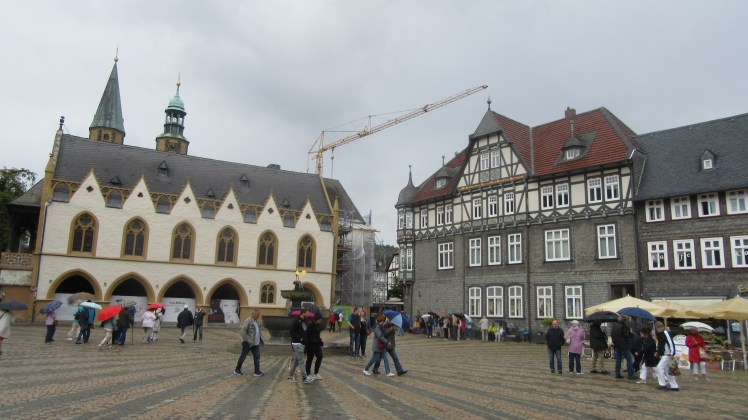
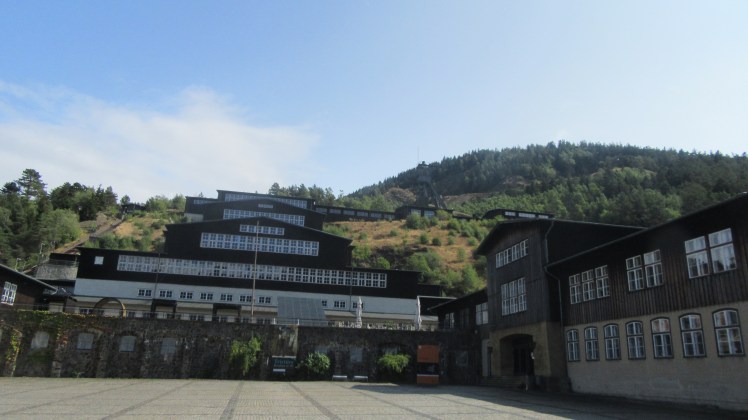
The main market square.Rammelsberg Mine! The large building straight ahead with multiple levels up the hill was the ore processing facility where all the coming displays are.
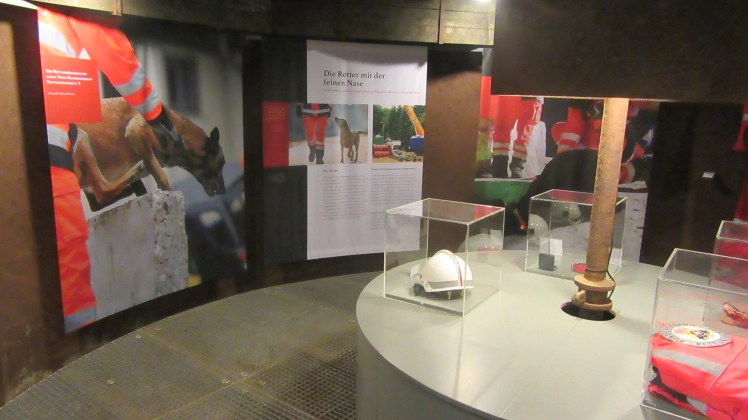
Inside one of the big tanks. Rescue section. That section on the wall is titled “The Rescuer with the fine Nose” in regards to rescue dogs.
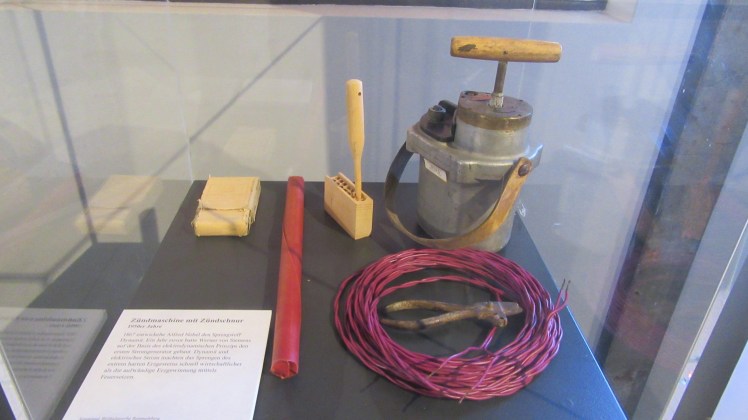
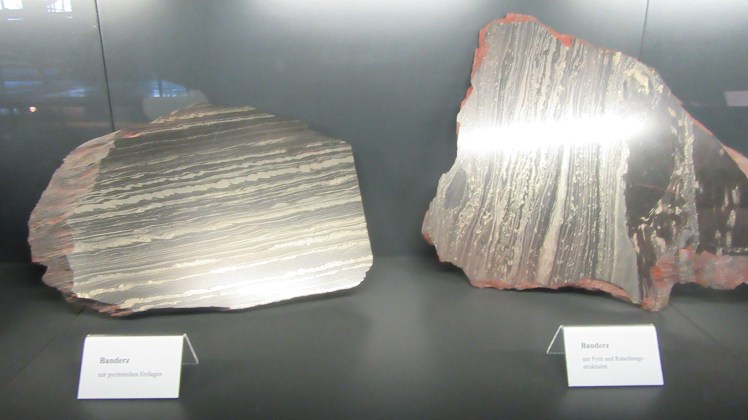
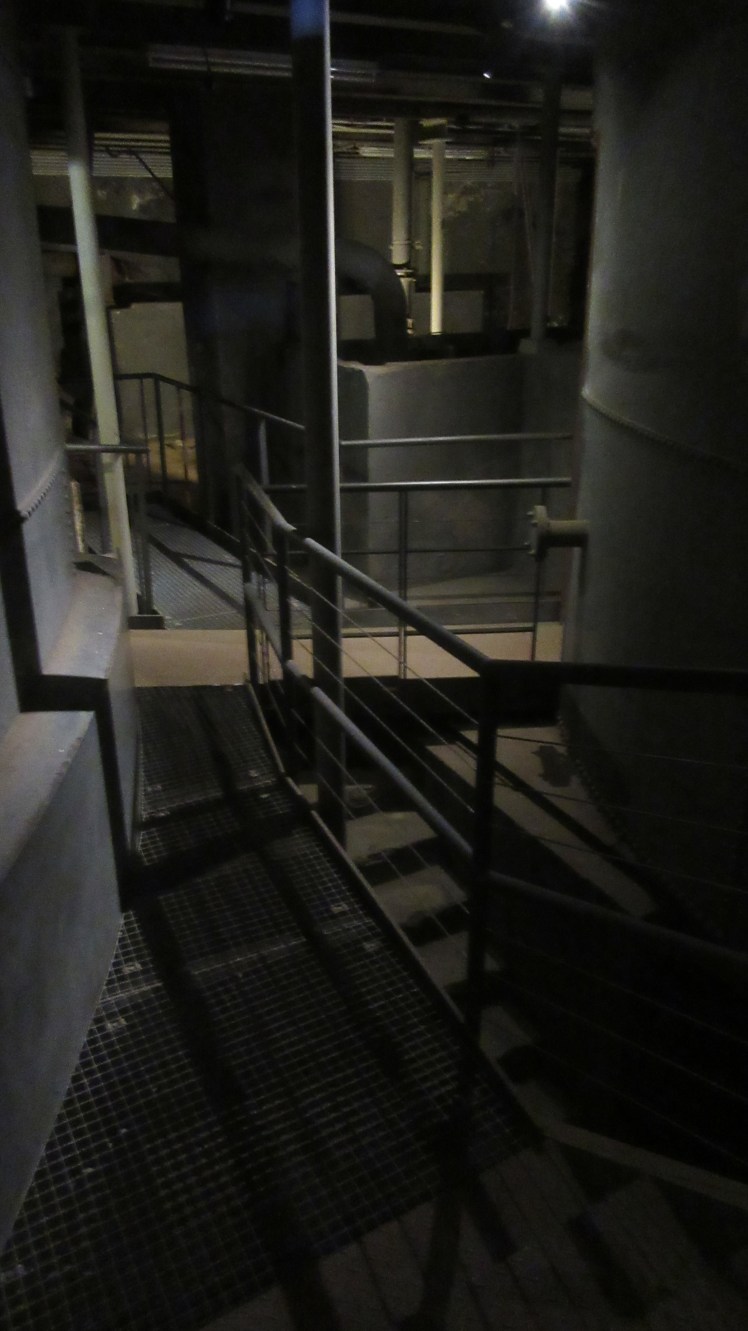
Some old explosives and a plunger from the ’50’s.Some ore from the mountain, it’s all swirled and mixed in there with the stone.Platforms between the giant tanks.In the display room above.In another display, video more or less attached to this.
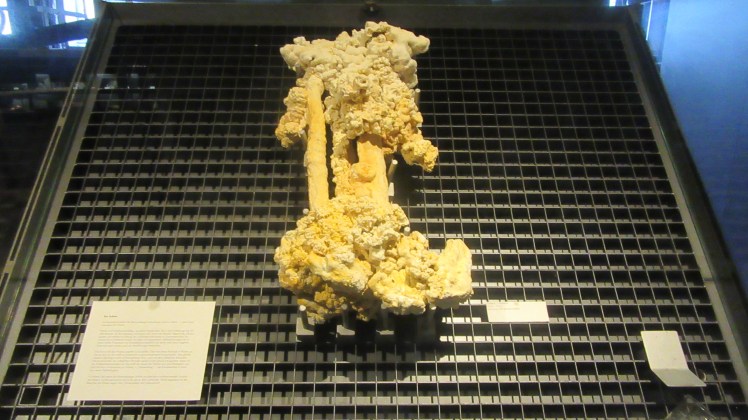
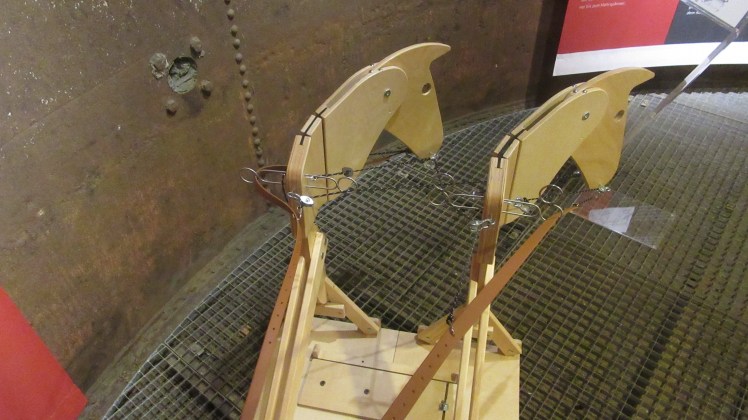
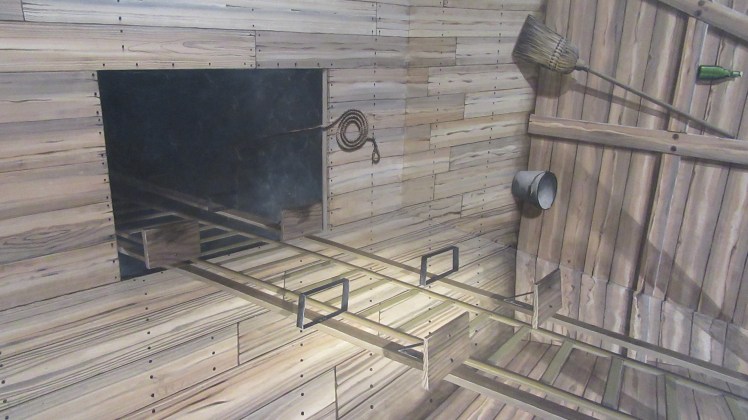
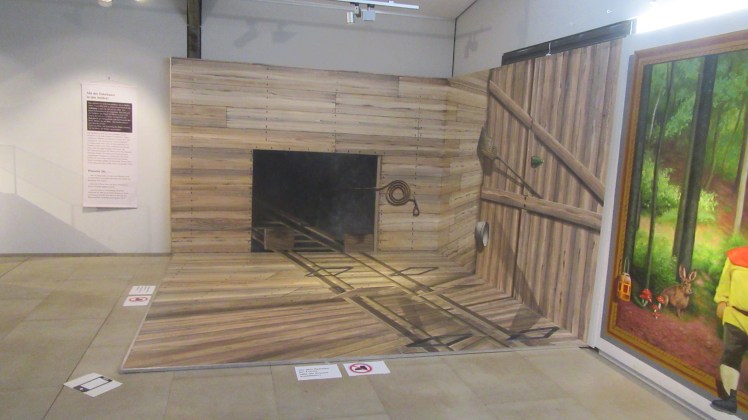
Don’t quite remember what this is, but obviously some kind of weird formation.There were a lot of horses used in the mines for pulling carts and lots of things. Even a little demonstration here showing a system of how horse reins work, letting you play with, turn and stop the horses.What is going on here!?Oh, it’s a corner painting that you can go on and put yourself in goofy poses giving an MC Escheresque type feel to it.A weird picture of the Seven Dwarves, next to the above image.
Doggy helped out too! This is inside one of those big mixing tanks.
A strange walkthrough video I made showing the entrance of one museum structure, where you gotta walk around a ladder wall and down stairs into the museum chamber below. The horse is a mockup of Ramm’s horse that allegedly discovered the ore… according to legend.
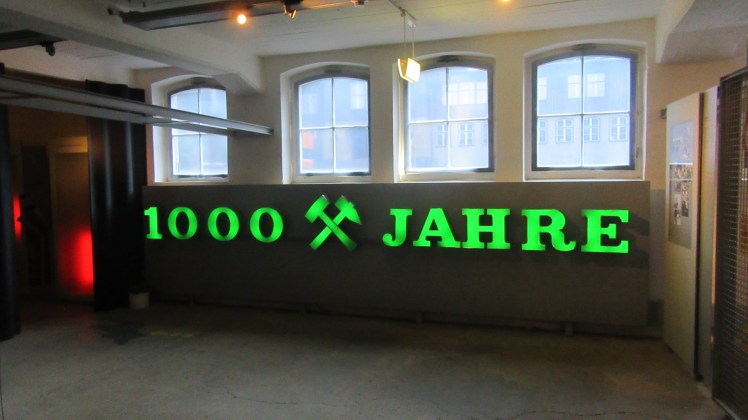
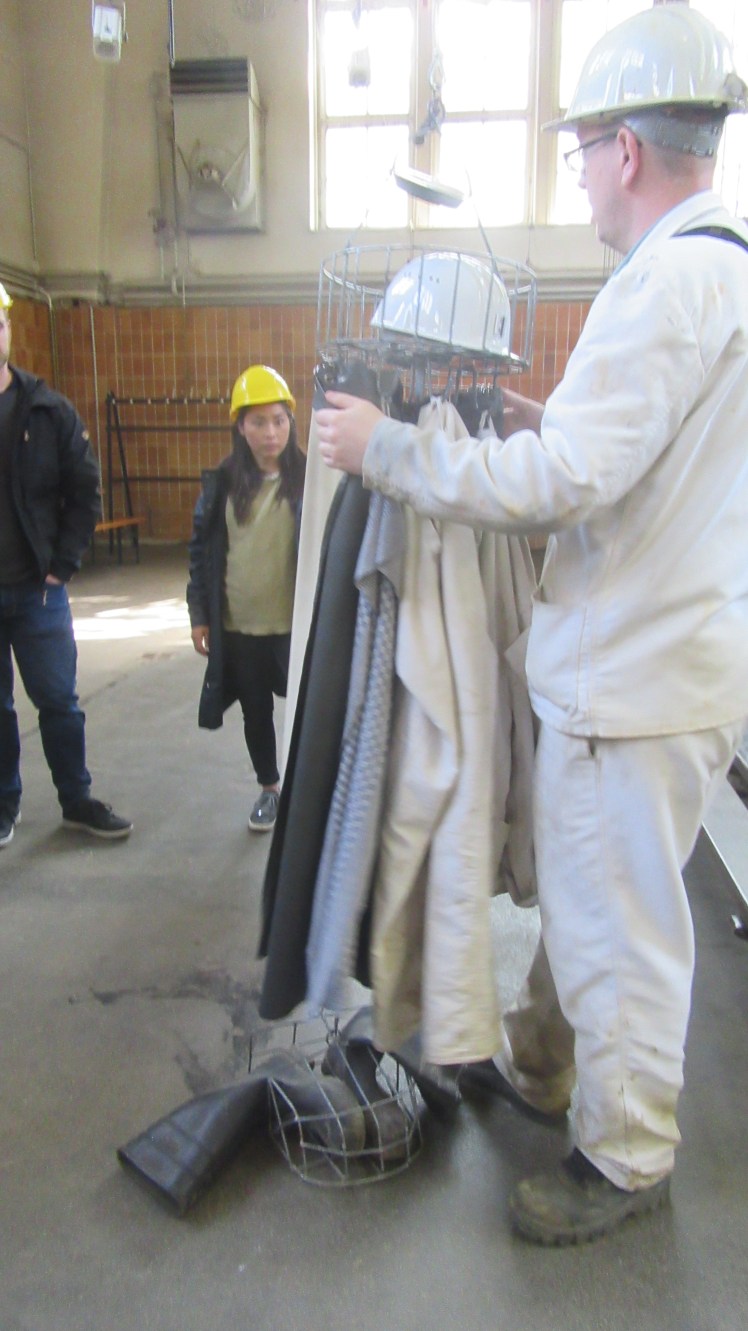
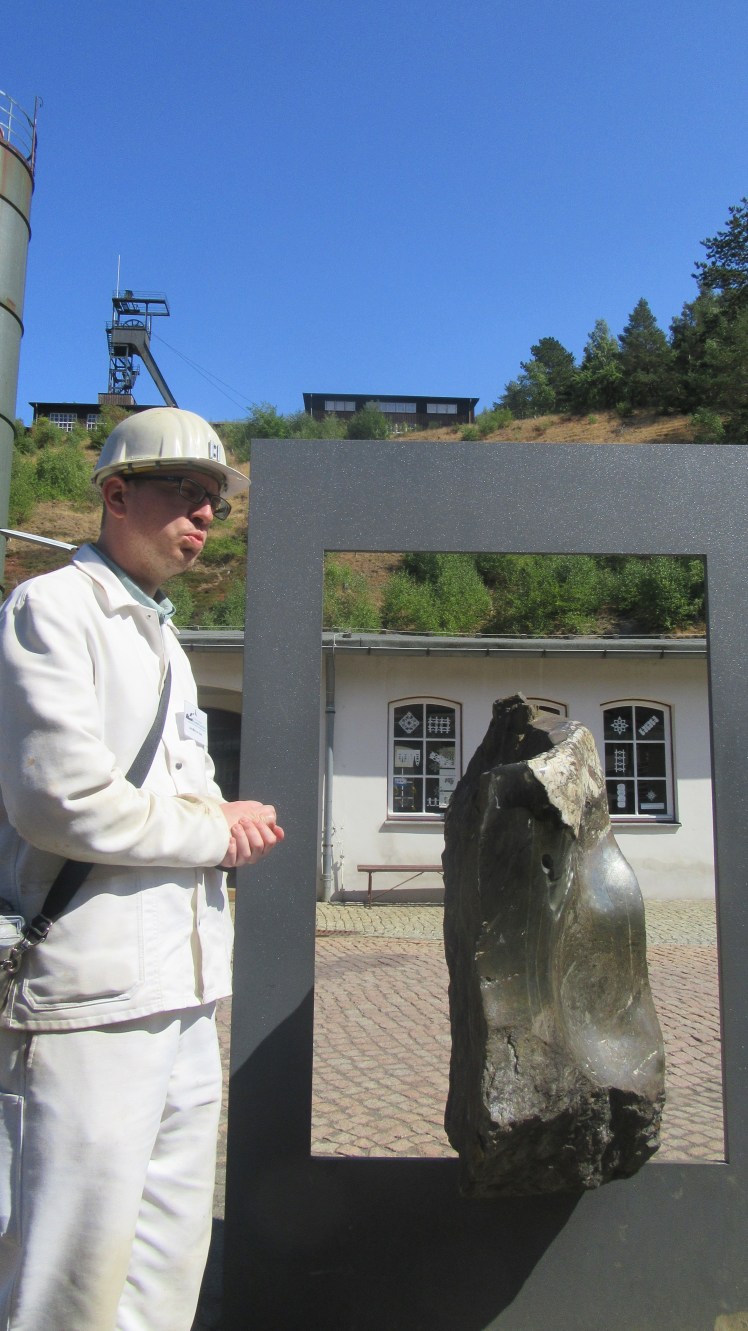
Inside that partially underground museum from the video above. “1000 Years”Inside the main waiting area/former miner changing room.That’s our guide, Jan-Marcus (pronounced yawn-Marcus) showing a miner’s equipment! A set of day clothes and work clothes, with boots and helmet.The miner’s hung their clothes up for very clever reasons. One reason was security to prevent theft from other miners, as they are lowered by pully, and locked by a chain and lock. Also it saves a ton of space allowing a lot more to fit instead of filling the room with lockers. And thirdly as heat rises, it helps with drying after they wash their clothes.A large mural in the ticket office, formerly the payment room where miners received their pay. It was either painted before, 1933 and then altered by the Nazis to make it a bit more propagantastic, or they painted it, but whichever they case it was modifed after WW2 to get rid of the propaganda aspect. The description our guide gave was that it showed the worker should always be working for the community after work (when the Nazis painted/altered it). It now shows the miners before work, and after work at home with their families.A piece of stone and ore from the mountain. It contains lead, zinc, tin, copper, silver, and a teeny tiny bit of gold. If you look carefully, you can see a hand print in it, the dark spot just above the middle is where the thumb was. How it got a hand print in it, I have no idea. It’s kind of angled away.The train with ‘carts’ each person gets into.The train entrance to the mine.Hunched over inside the train car, that used to hold 10 grown men to go deep into the mine. It was a very bumpy ride, and without that helmet, well, it’d be a pretty bumpy head too.One of the larger stand up drills which he demonstrated. I would have filmed, but it was so loud, I couldn’t hold camera, and plug both my ears. Hearing protection laws weren’t put in place until AFTER WW2. Before that it was up to the miners to come up with their own ear protection.A section of wall “rigged to blow.” When they used dybanite, the drilled deep holes, and put in large sticks of explosives. You can see the fuses dangling down, barely. They would shout “Brennt!” (It’s burning!) The equivalent of the American “Fire in the hole!”
Guide explaining the large electric drill.
A brief sample of what it looked like when the dynamite was detonated electronically. This visual is slowed down 10,000x so you can see it ‘blasting’ from the middle outward, as they used to do it.
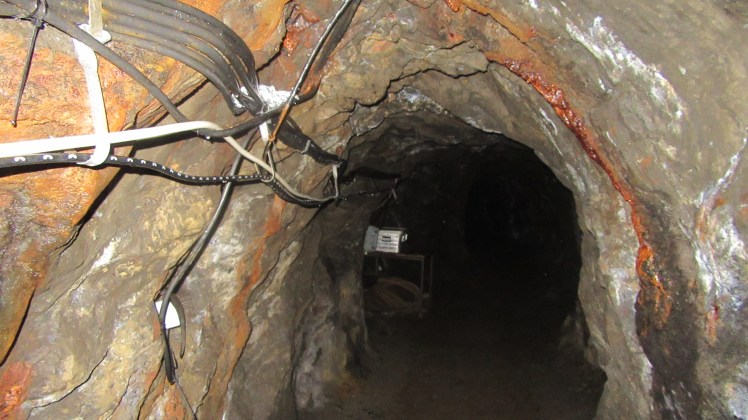
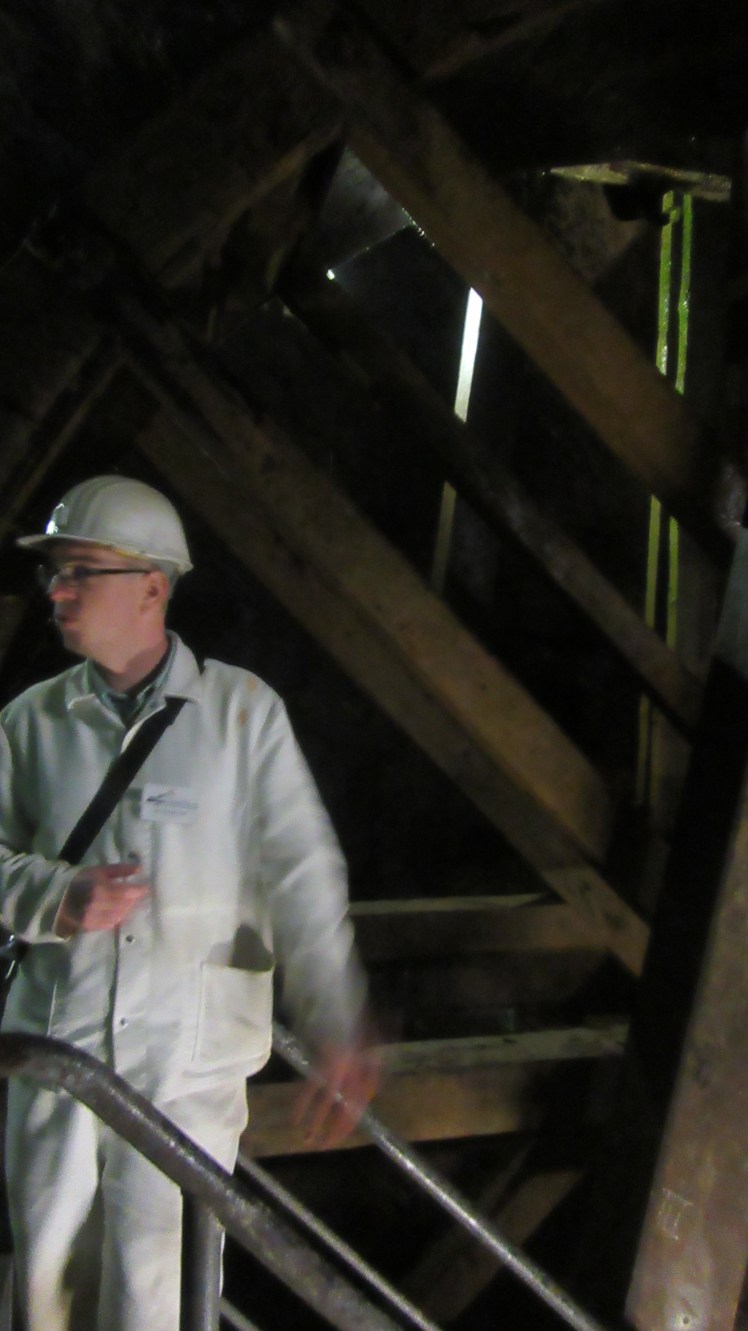
Inside the mines! Some parts of the cave are so low down, I had to bend wayyy over to get through, only very small children could walk through standing up. That helmet is absolutely 100% necessary! So much scraping on the roof.
Back above.
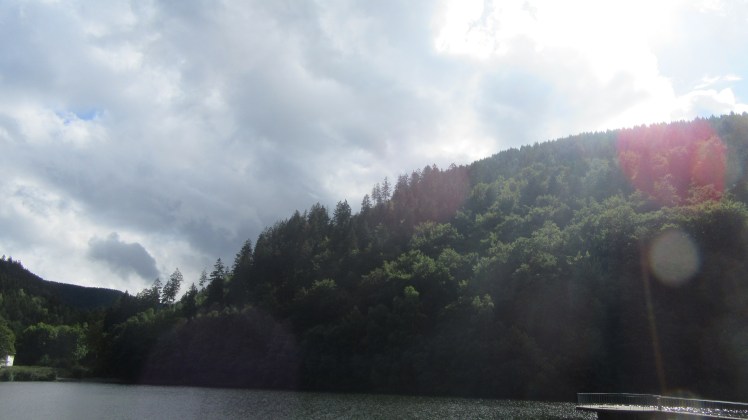
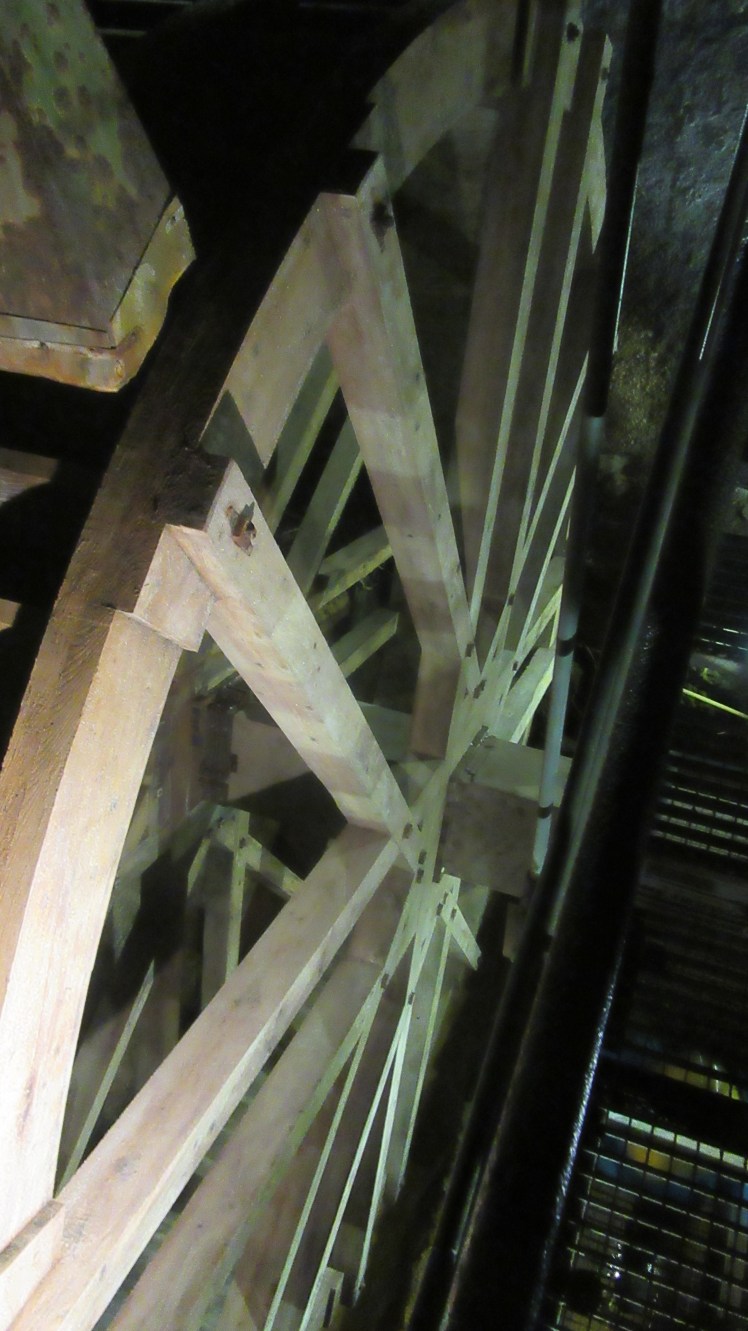
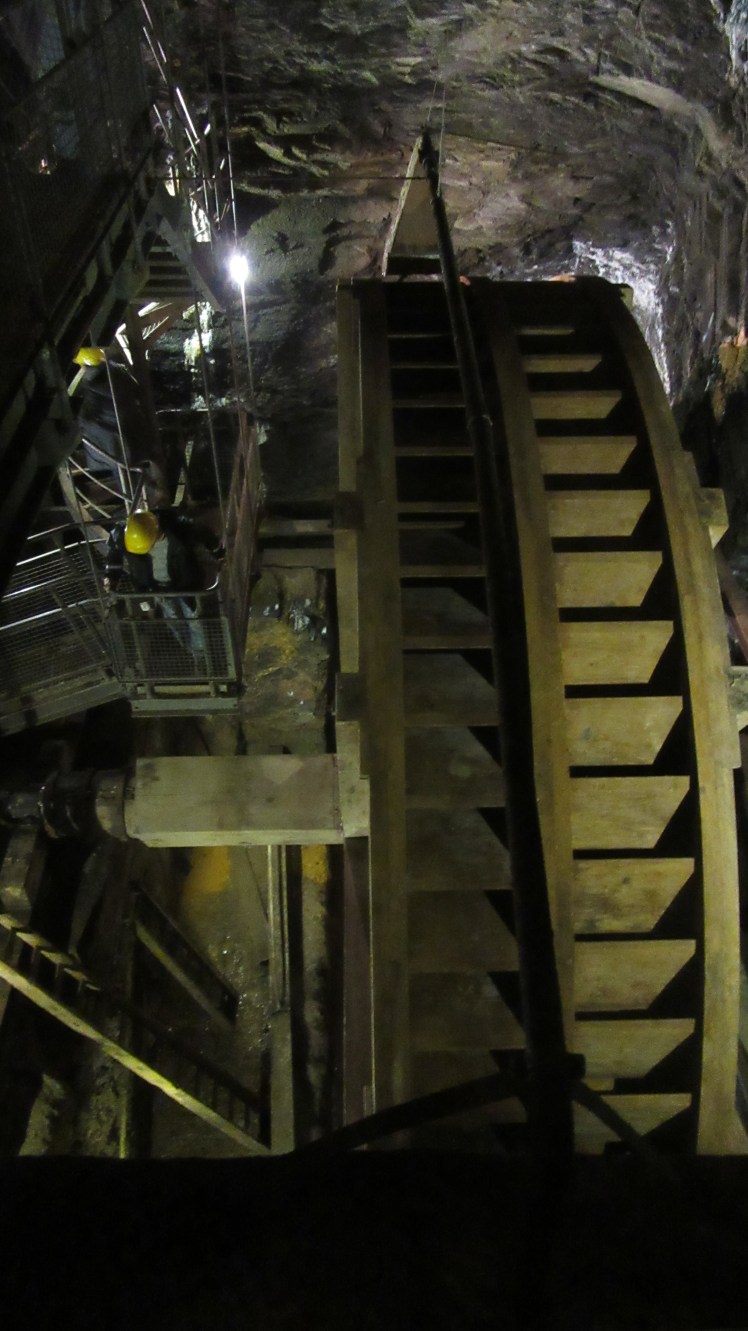
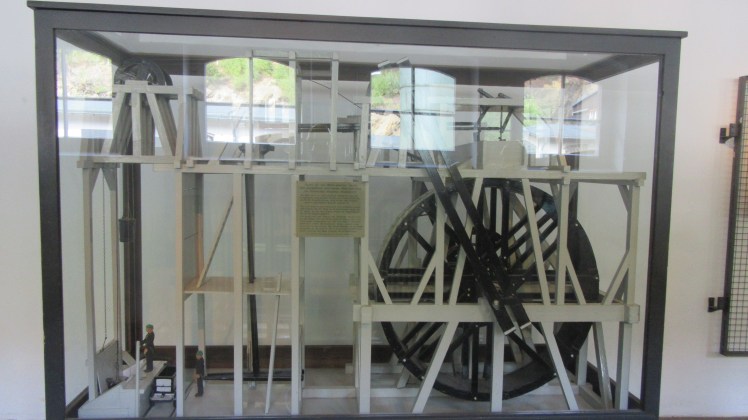
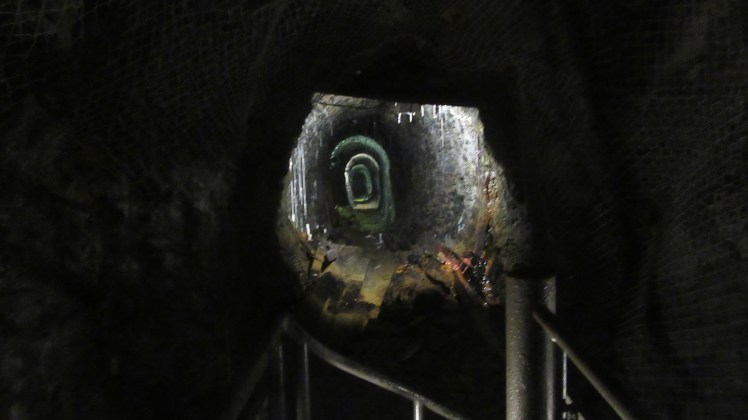
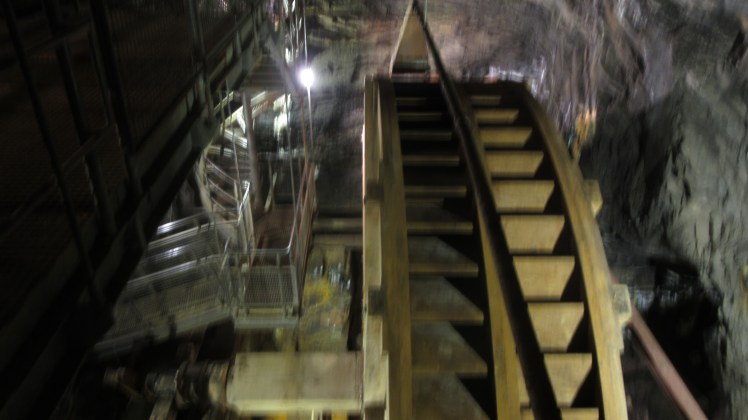
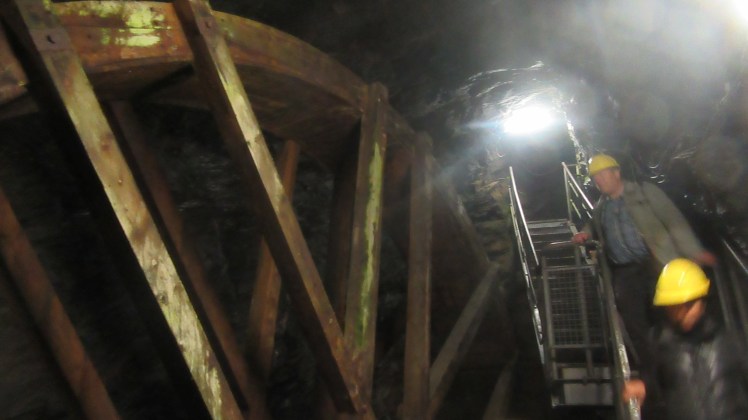
The lake where water was drawn for hundreds of years to turn the massive underground water wheels.Pretty lake! It’s a short walk up the road from the mines.The entrance that takes you to the water wheel mine section.Various metals bleed through into the stone, some of which are toxic and were used as poisons during the middle ages.Copper residue leaking in over hundreds of years.More metal bits seeping through.This wheel is a new replica.The giant water wheel. Double sided so it could spin either way, as the funnel above could be pointed different directions. They had to bew rebuilt every few years. Built above ground for testing to make sure it works, then disassembled and carried by hand down into the very deep recesses of the cave.A model of the underground wheel system back next to the changing room. The guy operating the wheel couldn’t see it, as almost all this would be stone, and the other guy filled and emptied the buckets, down in the bottom left.Down one of the caves.
This is another massive waterwheel which has been down here for 120 years,
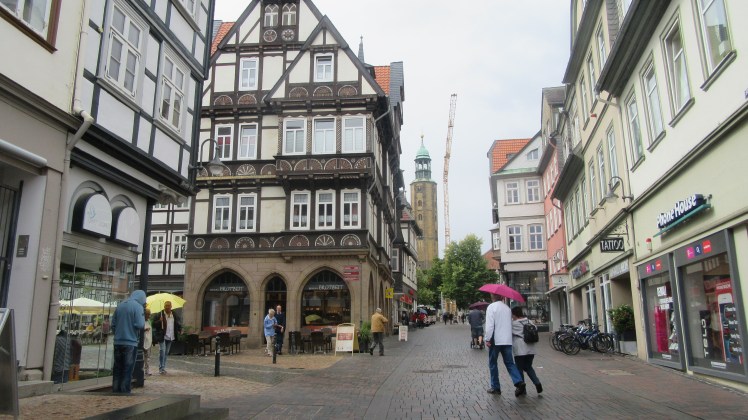
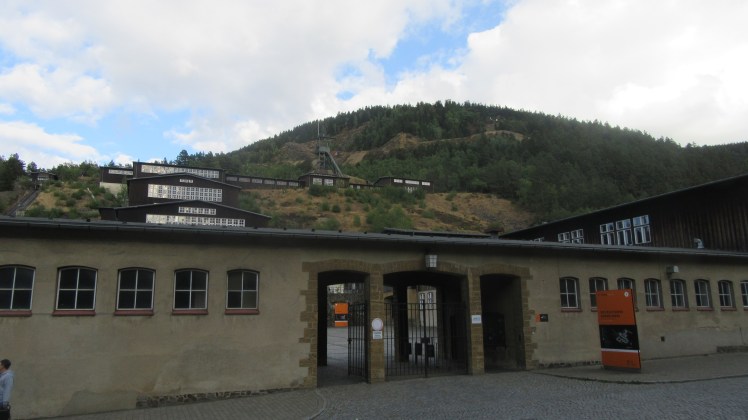
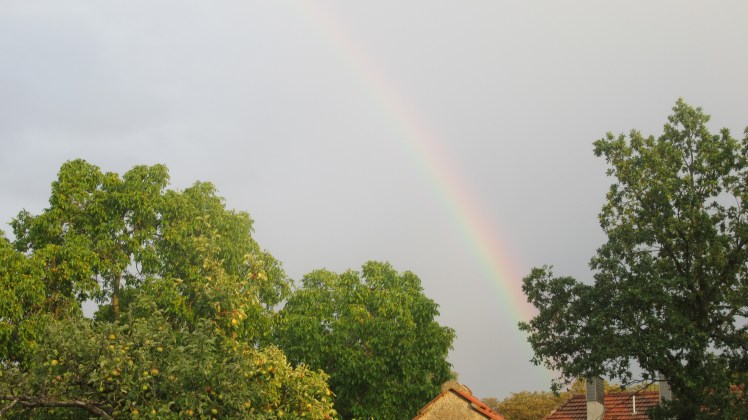
Main entrance and the Rammelsberg hills.Back in town, a neat building.A church.There’s several cuts of stone just like this around town and I remember the tour guide mentioning it. You can see the handprint on the left side again a bit clearer.This tower, the (Weberturm) is about 800 years old. It is now a hotel. And now I wish I was staying there.Plaque on the tower with my own translation: “This house is mine, and not mine. It will be another’s after me. It was another’s before me, and it will still be here when I go. I put this house in God’s hand, and it goes in and out.” Then it goes on to say it the tower was built in the 13th century, is was burned and damaged in 1945, and restored in 1946-1948 at the expense of the Grote family.Rainbow on the way home near my “Pension” (hotel).


















 jonsjourneythroughgermany.com
Fascinating information about the mines. You look like a real miner with the hard hat!
LikeLike
Can’t believe 10 miners had to ride in that tiny train car
LikeLike