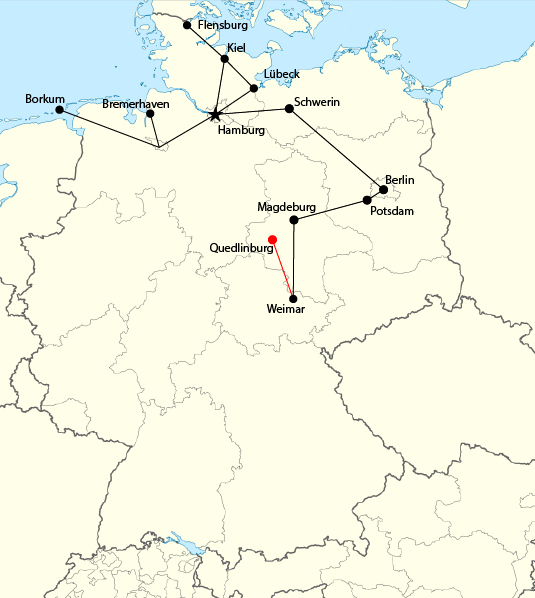
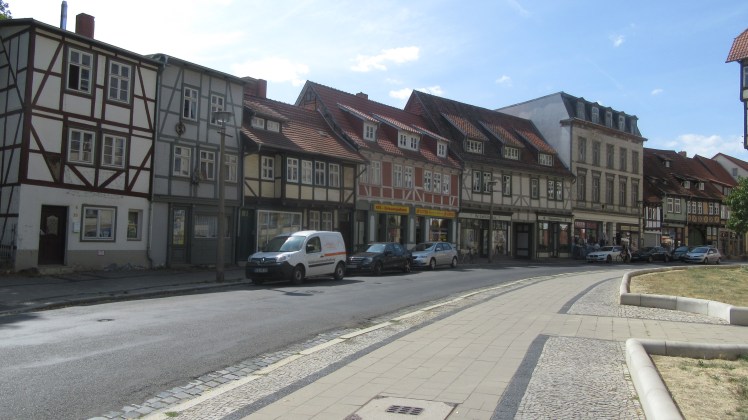
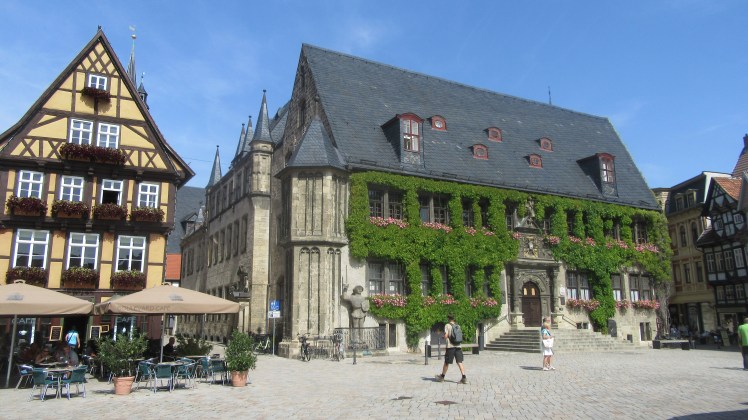
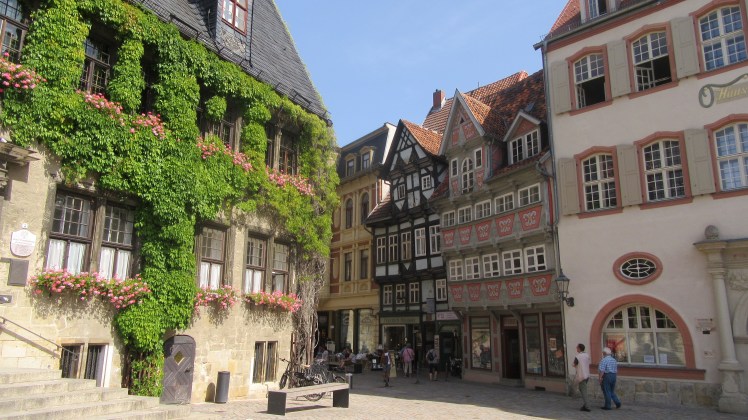
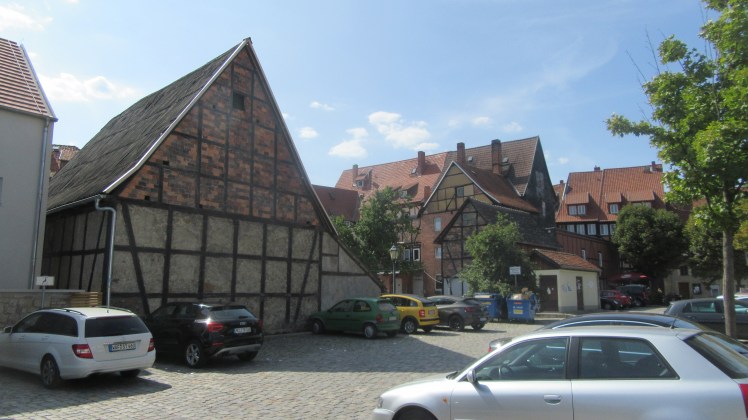
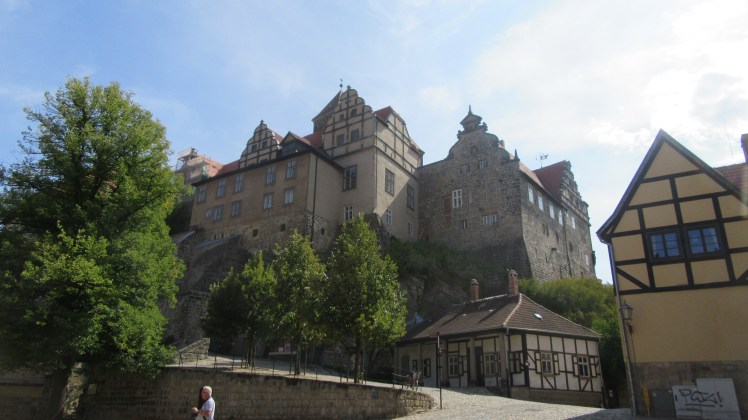
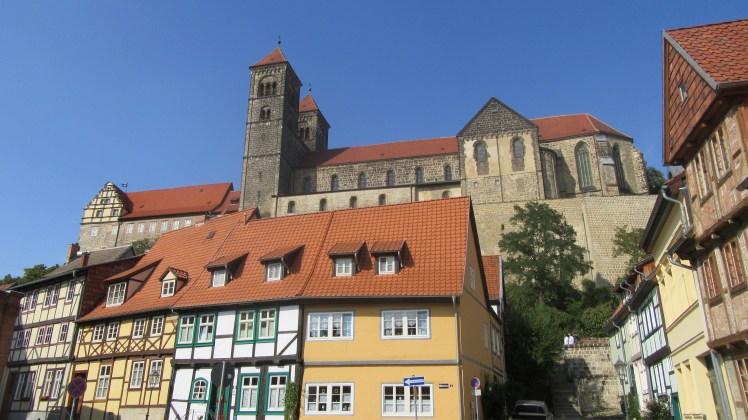
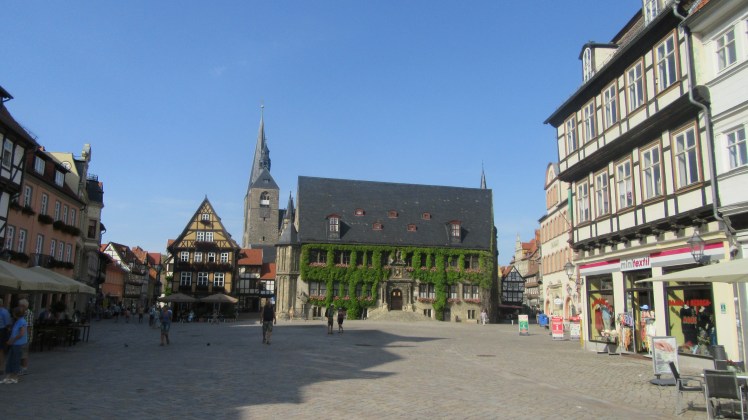
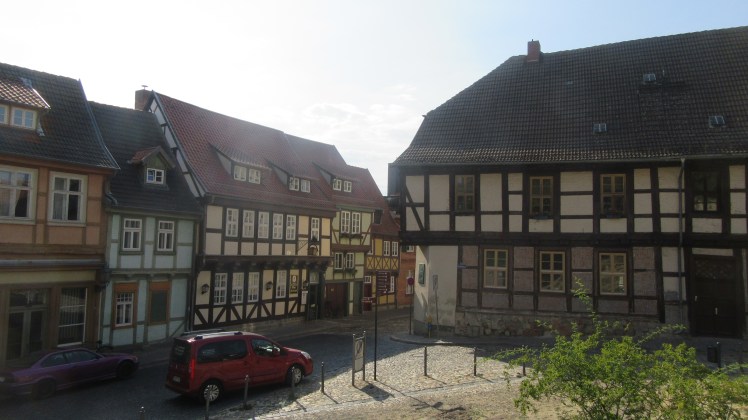
Well I successfully made it out of Weimar and to my next town for only one night. Though I think my train was a time machine of sorts, as it took me to the town of Quedlinburg. It looks like I stepped right into the midst of an old medieval village right in the heyday… along with thousands of other tourists. It’s regarded as one of the best preserved Renaissance and medieval towns in Europe. It’s simply loaded with ‘Fachwerk’ buildings from ye olde times from various centuries. Luckily the town mostly survived the ravages of World War 2, whereas similar medieval city Rothenburg (from my last trip) was very heavily damaged and destroyed. There isn’t a whole lot to do, mostly stuff to look at, and 2 small museums I will get to tomorrow. The main attraction however is the giant castle and abbey up on top of the hill. It really stands out high above all the buildings, and gives a great view of the city when you go up.
“Quedlinburg Abbey (German: Stift Quedlinburg or Reichsstift Quedlinburg) was a house of secular canonesses (Frauenstift) in Quedlinburg in what is now Saxony-Anhalt, Germany. It was founded in 936 on the initiative of Saint Mathilda, the widow of King Henry the Fowler, as his memorial. For many centuries it and its abbesses enjoyed great prestige and influence.
Quedlinburg Abbey was an Imperial Estate and one of the approximately forty self-ruling Imperial Abbeys of the Holy Roman Empire. It was disestablished in 1802/3.”
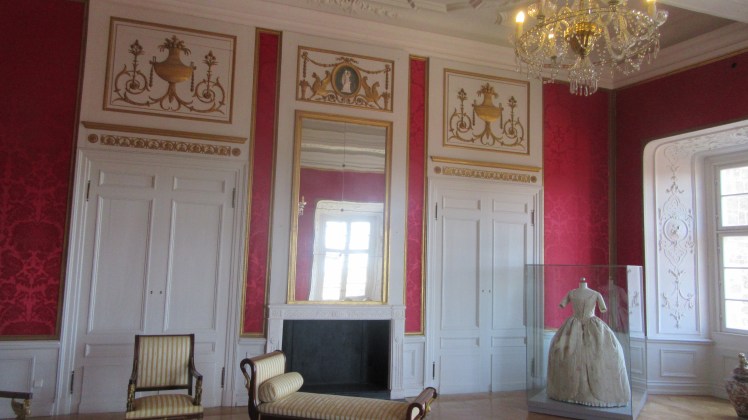
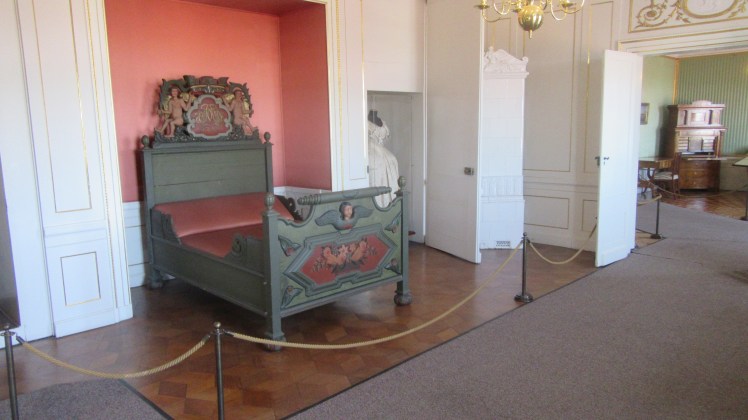
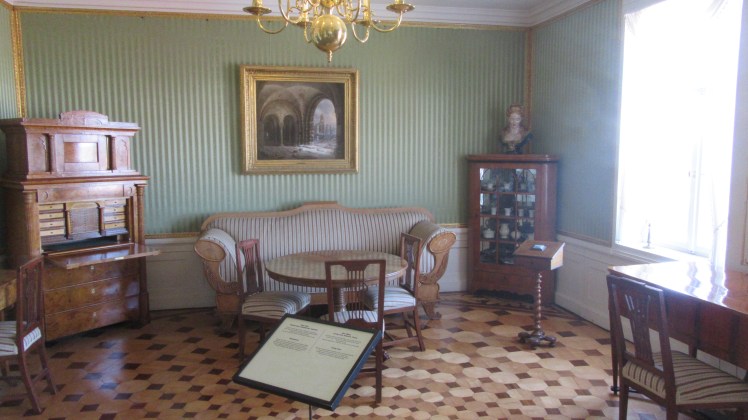
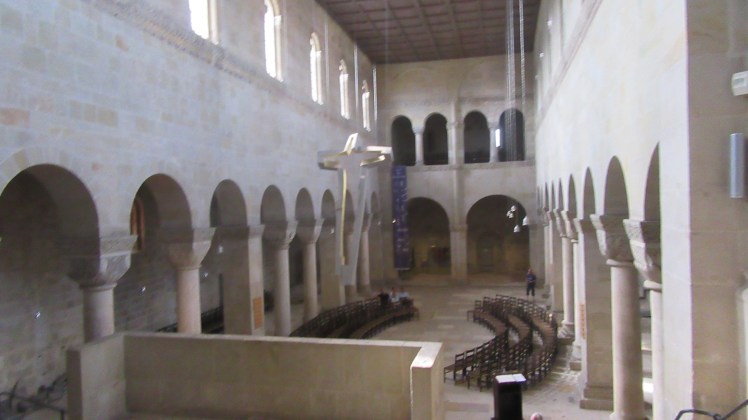
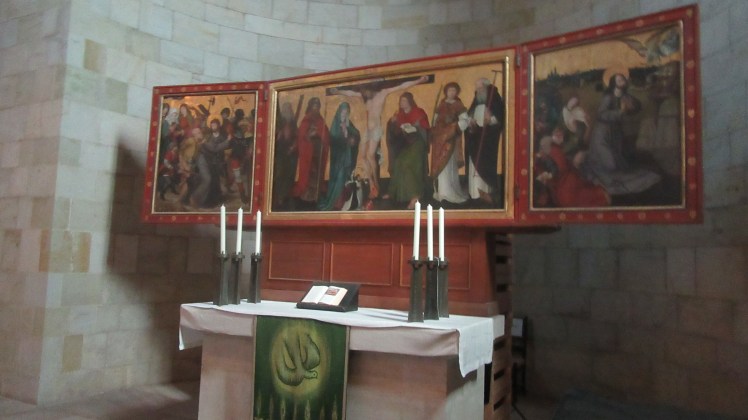
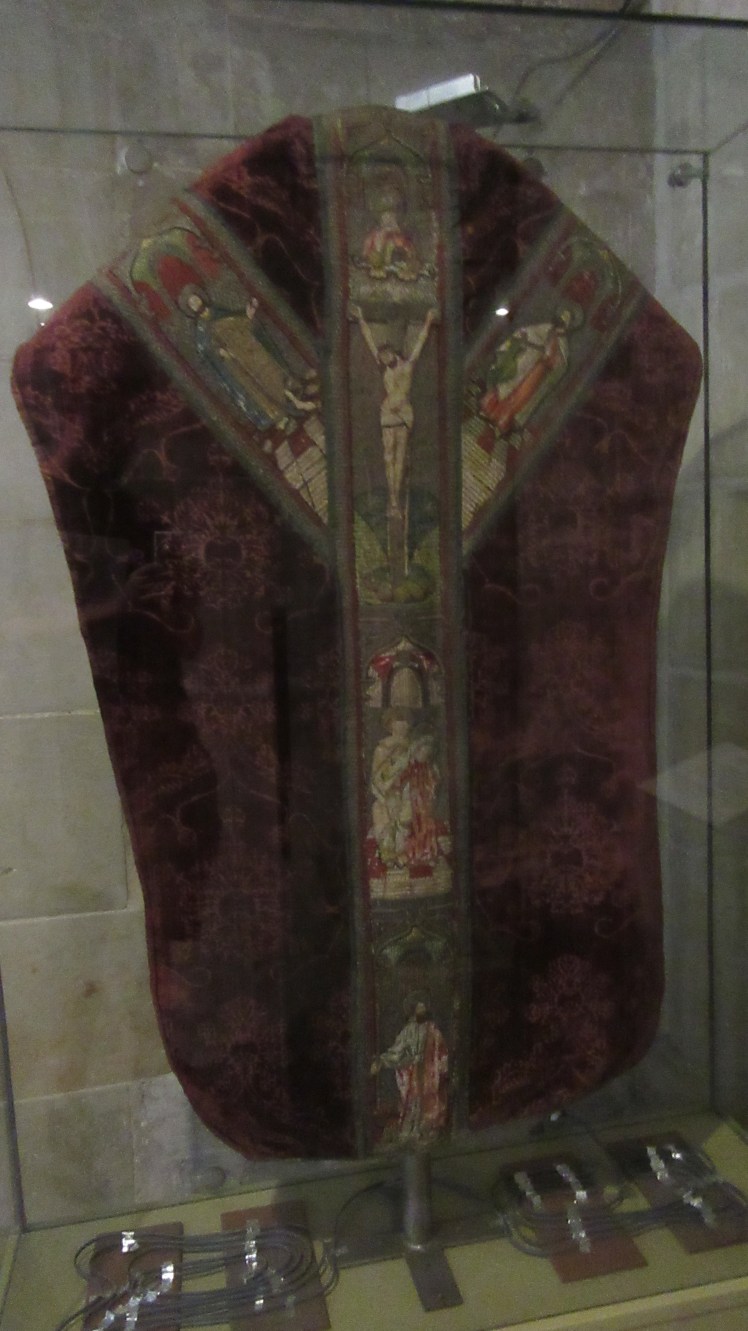
There is an old palace next to the abbey on the hill and is a museum you can now walk through, and like many other palaces it is quite nice, though nothing like Buckingham Palace, The Palace of Holyroodhouse, Schloss Schwerin or the Peterhof. The abbey is quite large, and incredible given how old it is. There are small treasure chambers up stairs past the main alter containing ancient royal treasures… or… at least the gilded boxes that used to contain ancient royal treasures. When the Allies took the city in WW2, many of the treasures in the church were illegally looted by a lieutenant from Texas. He was eventually discovered, they settled the issue and the objects were returned to Germany. However other treasures are still missing, somewhere in the U.S. Underneath the abbey is the royal crypt, though this one only appeared to hold 1 intact sarcophagus, and another that was heavily smashed up. One of them holds, or at least held the remains of Henry the Fowler, or Heinrich I, generally regarded as the first King of Germany. The brochure from the abbey itself says the body was removed at some point in history and nobody knows what happened to it. Other outside sources say the body is in the crypt. In a display room in the museum/palace walk through, there is a display of Heinrich I’s broken sarcophagus, though this is a different one from the broken one in the crypt. Strangely, it appears Heinrich Himmler, leader of the SS believed he was the reincarnation of Heinrich I, and visited his tomb in 1936, 1000 years after Heinrich I died and declared the tomb a pilgrimage site for Germans
I spent the rest of the day just walking around admiring the town and doing a bit of shopping. It was a bit late when I got there, as it took 4 trains to get into town.
It’s now time for a new thing I will commonly add to my posts. It’s called “The List of German Cities With Goofy Names!” Where I will post names of cities that sound funny, or weird (Which is really all of them). And the first city with a goofy name is: Schneverdingen.
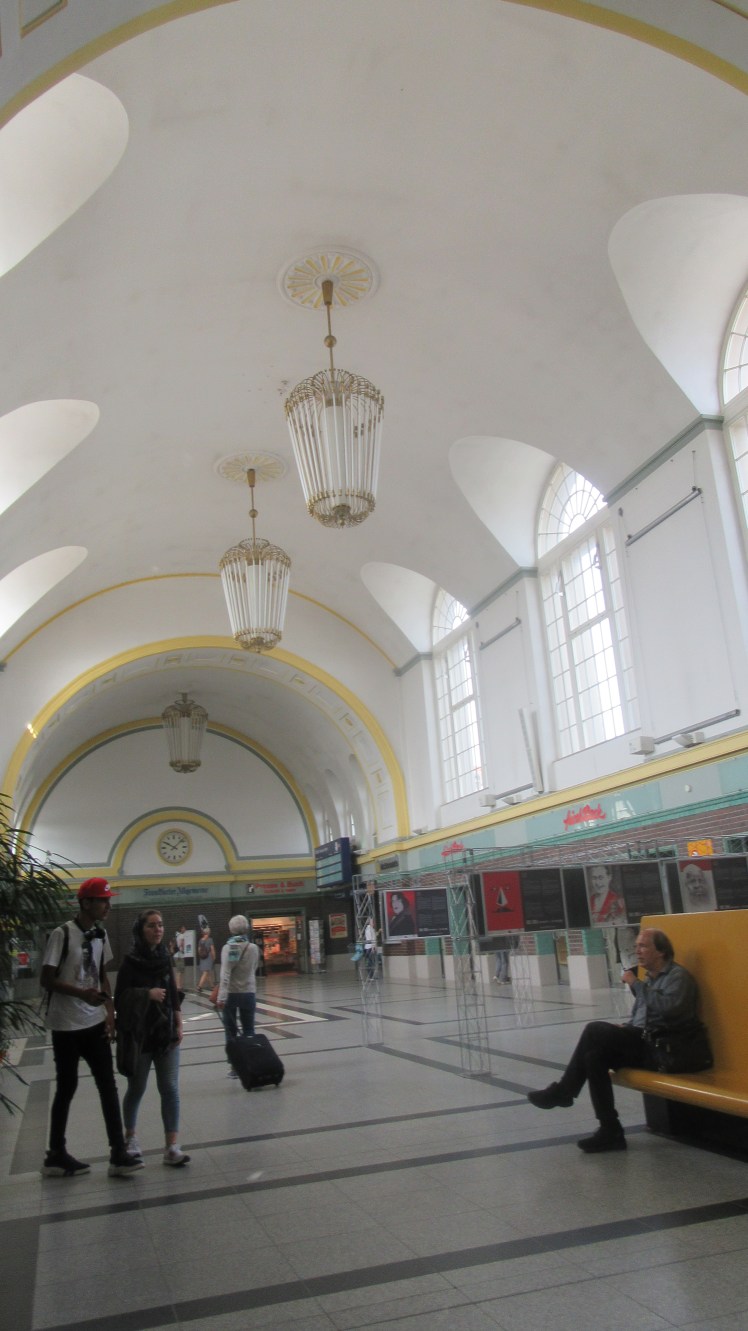
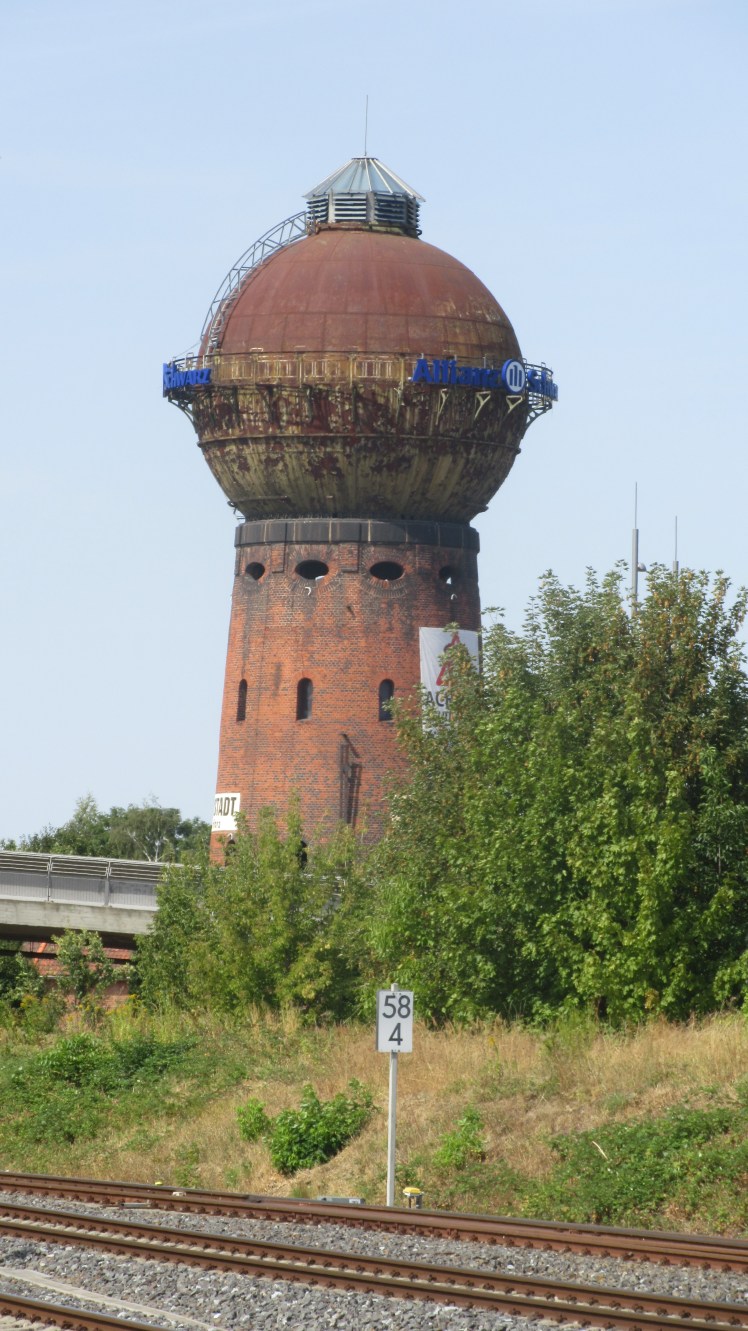
Now, before I get to city pictures, I’d just like to post this. They. Are. EVERYWHERRREEEE!!!




 jonsjourneythroughgermany.com
So cool to see all these old buildings, great photos! It seems like you’re always out and about exploring these cities, how do you have the time do all the research to put in your posts?
LikeLike