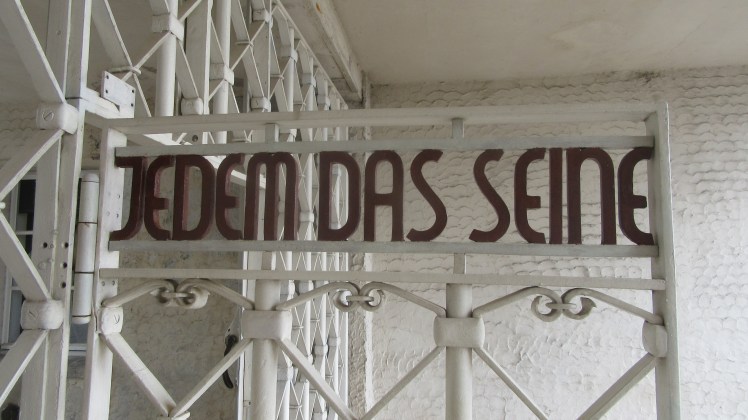
Or reversed, JEDEM DAS SEINE. (yeddim – dahss – zigh – nuh) “To each his own…” An old Roman principle that each man gets what he deserves. Though it was twisted by the Nazis to justify their brutality against the undesirables of their society.
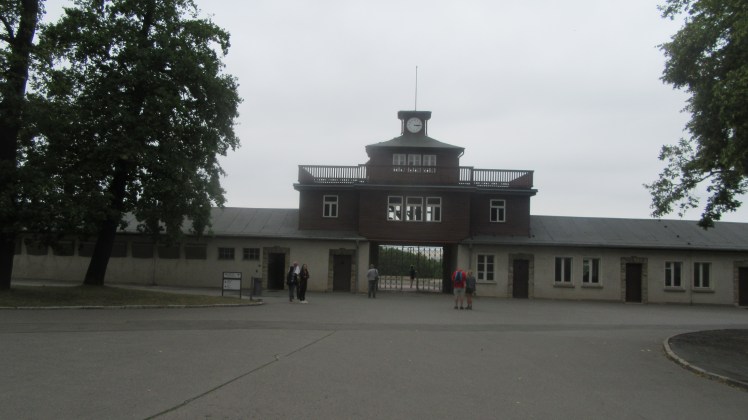
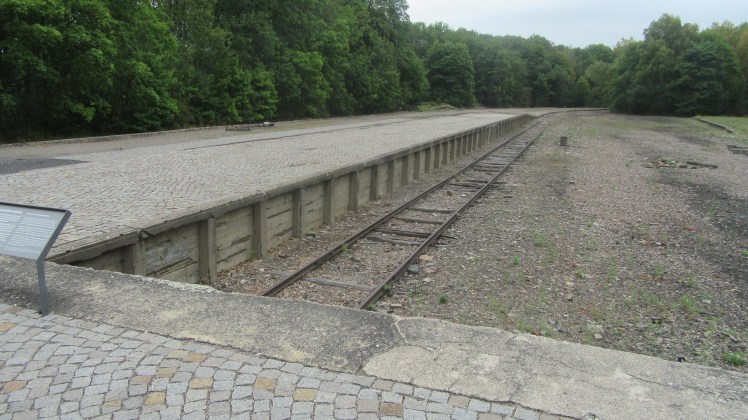
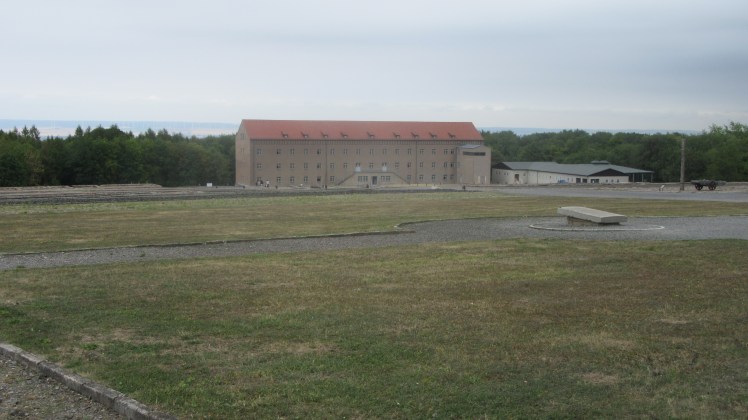
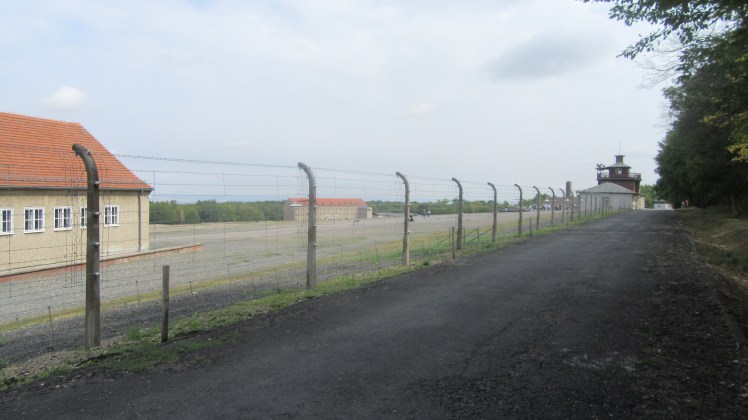
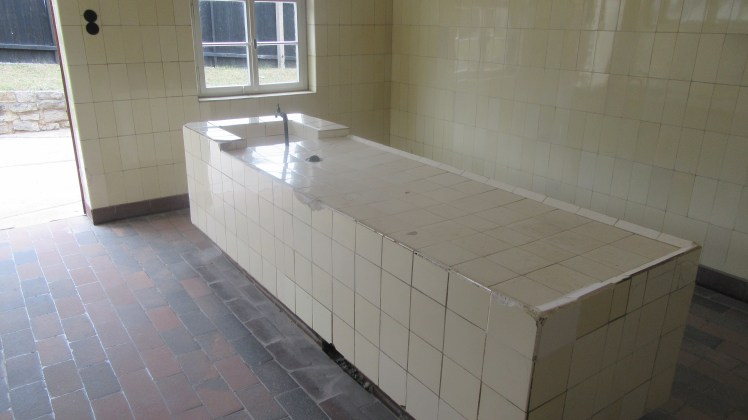
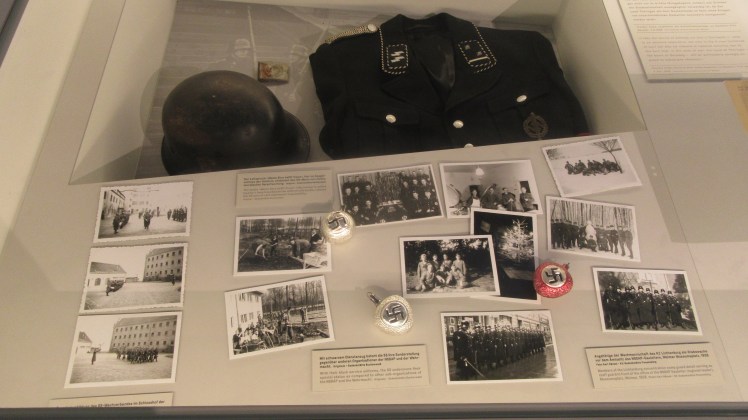
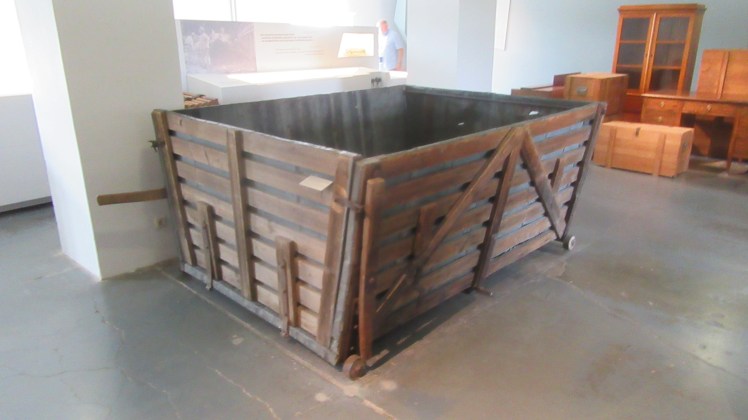
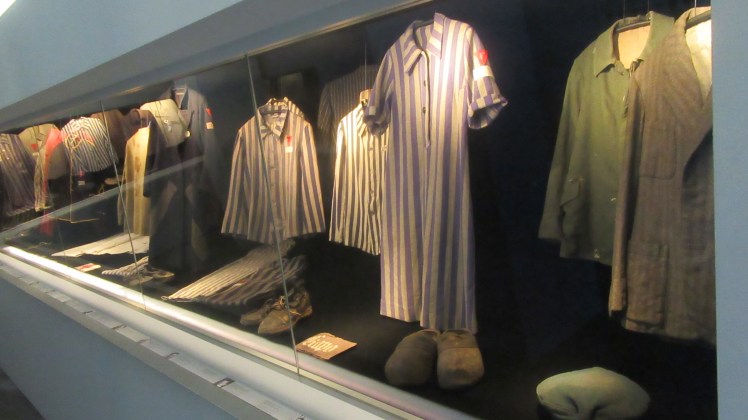
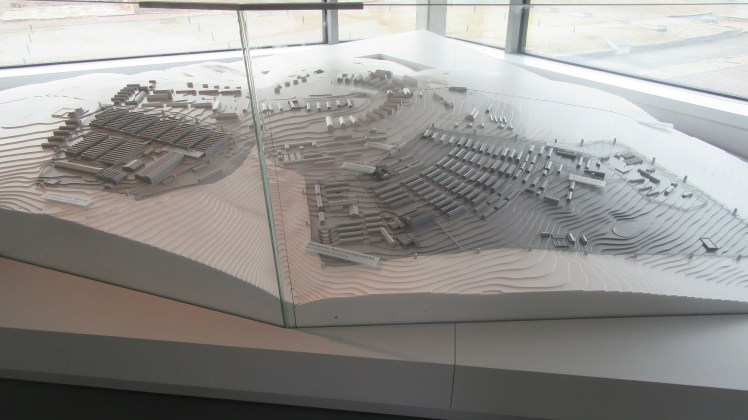
That was the main event of today. A bus ride to the infamous Concentration Camp Buchenwald. The phrase JEDEM DAS SEINE is formed into the main gate of this camp, instead of the much more common ARBEIT MACHT FREI. Here the twisted phrase is reversed so that those inside the camp read it straightforward. Usually the phrase inscribed on the gate is read left to right if you’re outside, and it is often photographed backwards, as such I did with the title. Operating from 1937-1945, Buchenwald was a camp for all kinds of prisoners, and by the time it was discovered and liberated by the Allies, 95% of the prisoners were not German. It held prisoners from over 50 different countries, with many Russian POWS, Jews, Sinti, and Roma people. Like many or most others in Germany it was a hard labor camp, where they were brutally forced to lay down train tracks, and create weapons for the German army in a factory attached to the camp.
An assortment of facts:
- 277,800 prisoners, 30,000 of them children
- 249,570 males, and 28,320 females, all aged from 2 to 86
- 56,000 killed in the camp, and nearly 2,000 sent to Auschwitz Death Camp
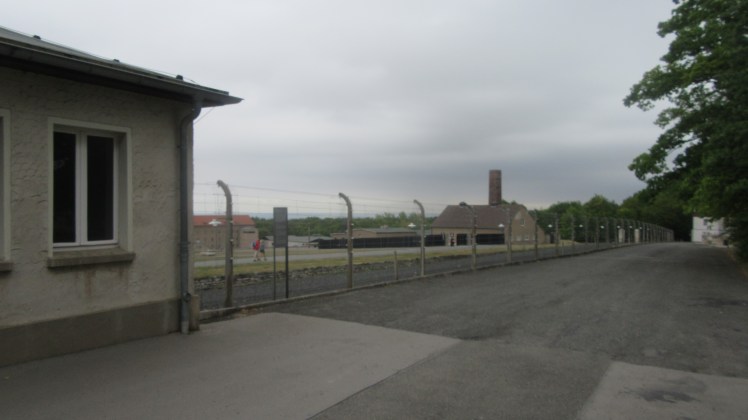
- Over 2 miles of electrified barbed wire
- The camp is massive, spanning 4,300,000 square feet.
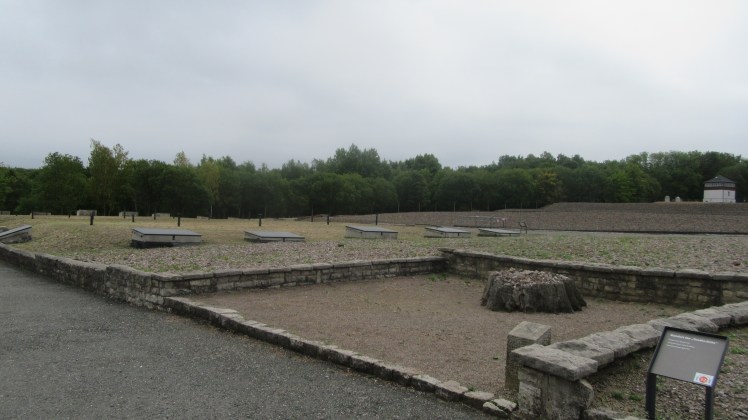
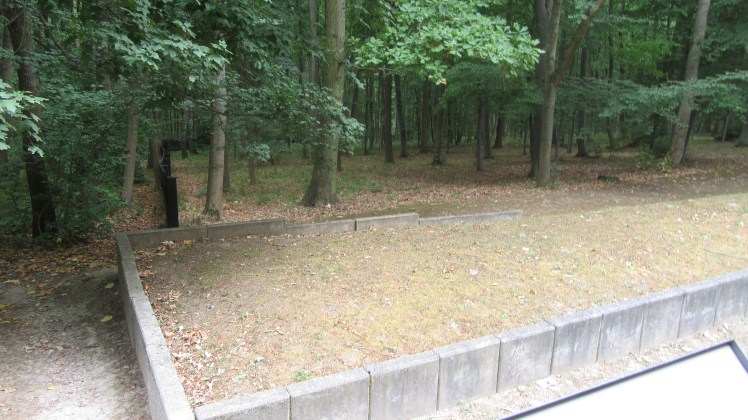
It sits on a hill, and from some spots in the camp you can look down into the lands below. Little remains of the original buildings, but like the other camps, the outlines made of broken stones are visible where the buildings used to stand. There was a gallery in the far corner displaying much of the history of the camp.
Something I read much to my surprise, that according to multiple prisoners who observed the evils in the camp later pointed out that vast majority of the crimes and cruel acts of malice against prisoners were simply out of boredom, specifically pointing out that the guards and commandants were not just sadists who loved torture. It was either boredom, or the guards were trying to just show off to their friends and other guards to ‘earn brownie points’ or get promoted. On a lighter note… more or less, the Camp Commandant, Karl Koch was highly effective at his job and ‘getting the dirty work done’. But he was also highly corrupt and abusive of his funds and power, but due to his skill his corruption was ignored. Eventually orders from higher up changed and the camps were ordered to ‘operate more economically’ and to root out corruption. After more charges of corruption and theft came out he was forced out in 1941 and relocated to another camp, and then to a desk job in Berlin. He was later convicted and sentenced to death by the SS, and was then executed by his own men in Buchenwald, just a week before the Allies liberated the camp.
There is also a nearby display showcasing artwork done by prisoners while in the camp. Since there were many artists and others among the camps, sometimes it was a skill that could help them get by. Usually artwork was of course forbidden, but on some occasions, officers and guards in the camp would commission pieces of art by the prisoners.
Ironically, I have read in the news today that the last known Nazi Collaborator living in the US has finally been deported to Germany to face charges… at 95 years old.
“Jakiw Palij, who claimed he was working on a farm and in a factory during World War II, had his U.S. citizenship revoked in 2003 by a federal judge, and ordered to be deported a year later. His appeal was denied in 2005. After the war, Palij maintained friendships with other Nazi guards who the government says came to the U.S. under similar false pretenses. And in an interesting coincidence, Palij and his wife purchased their Queens home near LaGuardia Airport in 1966 from a Polish Jewish couple who had survived the Holocaust and were not aware of his past. Palij admitted to Department of Justice officials in 2003 that he trained at a Nazi camp in German-occupied Poland. Court documents indicated that men who trained at the SS Training camp in Trawniki carried out the Nazi regime’s plan to murder Jews in Poland. The 95-year-old also served as an armed guard at the adjacent Trawniki Labor Camp – where he played an “indispensable role” in the death of roughly 6,000 Jews who were killed in one of the single largest massacres of the Holocaust in 1943, according to the statement.
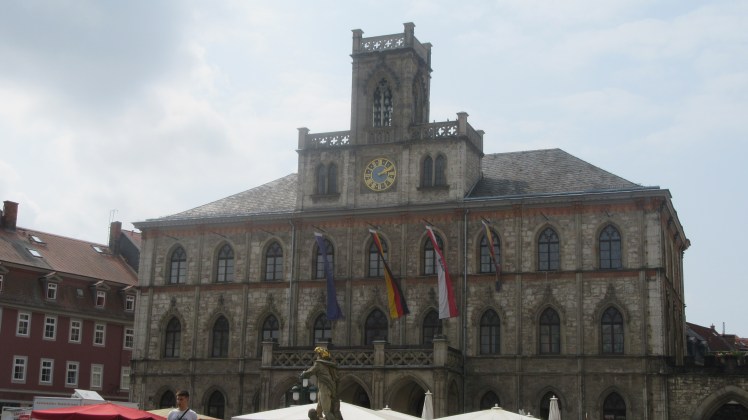
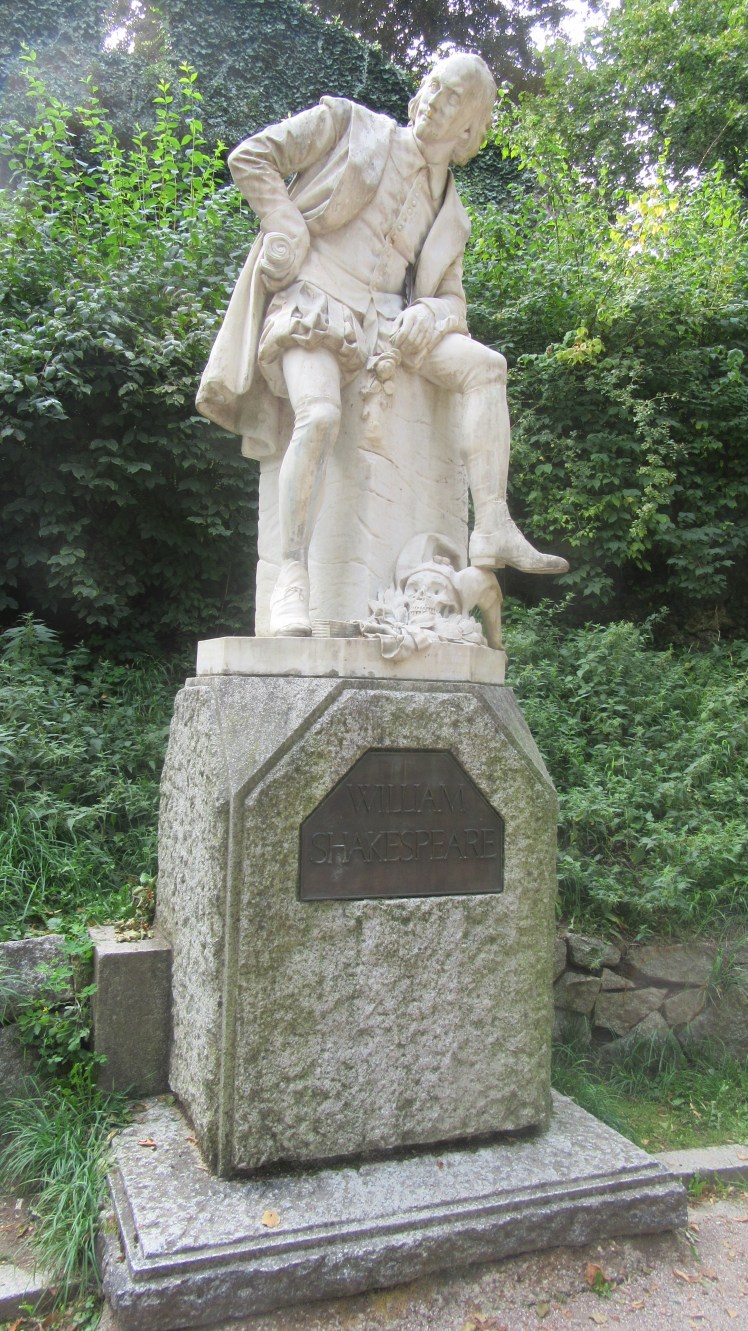
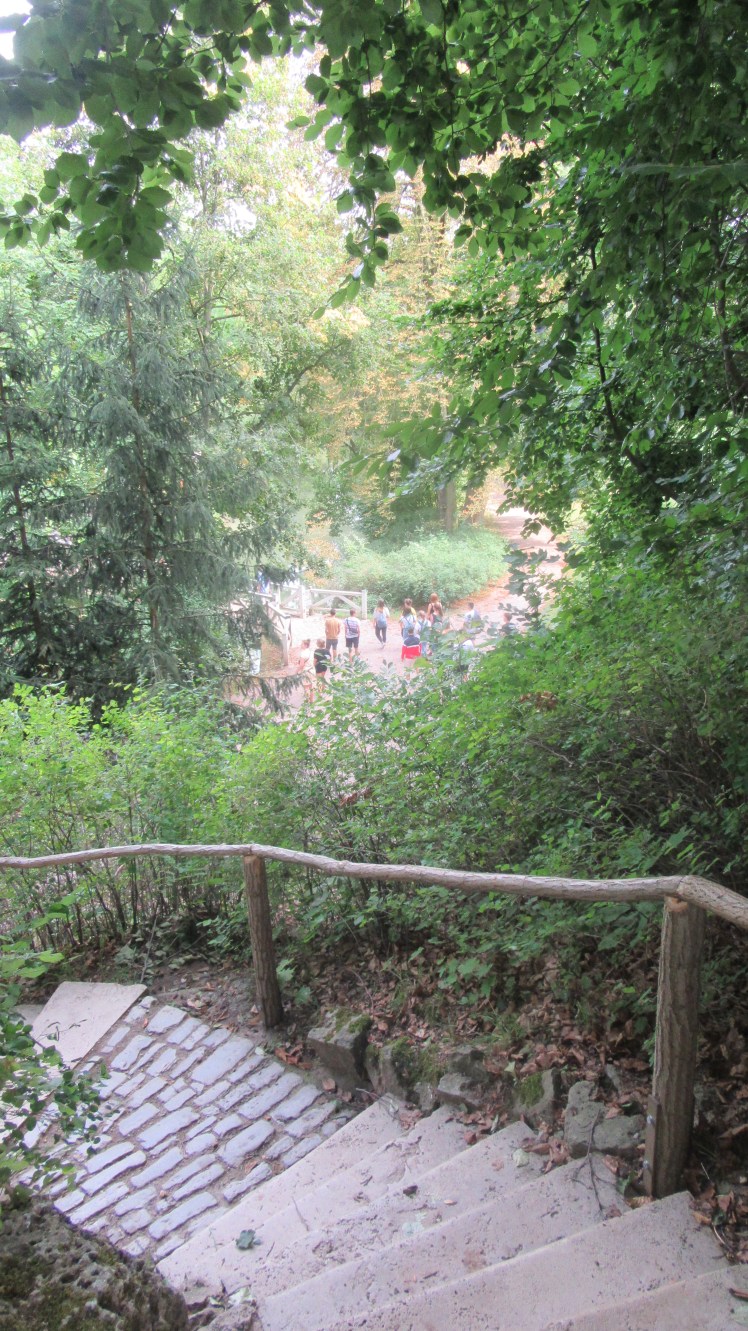
Anyways, after nearly 3 hours in the camp it got pretty depressing and I left for more… joyous things. There was still more to see, but I had other stuff I wanted to do of course. So I got back into main town Weimar, and headed right for the Weimar Palace. Naturally when I got there I found out it is closed, and will be for 5 years for renovations. Thanks for telling me it was open Google. So I decided I would go visit the Goethe house and check out the home of Germany’s most iconic, famous and prolific writer. Thankfully it was open, but when I saw the absurd entrance price to visit this guys home I said nope, and left. Every single museum I’ve been to so far has been much, much cheaper. I then walked to the park, which is very scenic. It has some old ancient looking ruins, which looks like it’s from a church or something. It looks like old medieval ruins, but it isn’t. It’s the Tempelherrenhaus Concert Hall ruins. During Nazi Germany, and being such a major cultural center, Weimar became overwhelmingly and incredibly supportive of the Nazi ideology, eager to have even streets named after famous people renamed after Nazis. This of course led to a major bombing campaign, and the concert hall was almost completely obliterated. Also in the park was Goethe’s Garden house., a small, modest 2 floor cottage. So I walked up, took one look at the entrance fee, and noped right out of there. I spent some more time walking around, and shopping, but buying nothing.
Well, the internet was still picky about where I was, so I asked if I could move rooms, and it worked allowing me to get images up from yesterday. And it was good…. for a couple hours then it decided to go down again. So no pictures tonight, will try again tomorrow. Well after trying again, I managed to get 1.
Update, well, I finally have good internet at my new city.










 jonsjourneythroughgermany.com