This is a long one, with quite a lot of extra images!
Today was one of those days that ended up being a lot more exciting that I thought it would be. I started with a visit to one of Kiel’s main-claim-to-fames which is a 3-part drawbridge that scrunches up into 3 sections like an accordion when closed. It’s the only bridge like it in the world, but it’s quite underwhelming to see. I didn’t see it scrunched up, but I just went because it was so close to my hotel, (and I was waiting for a bus for my real destination.)
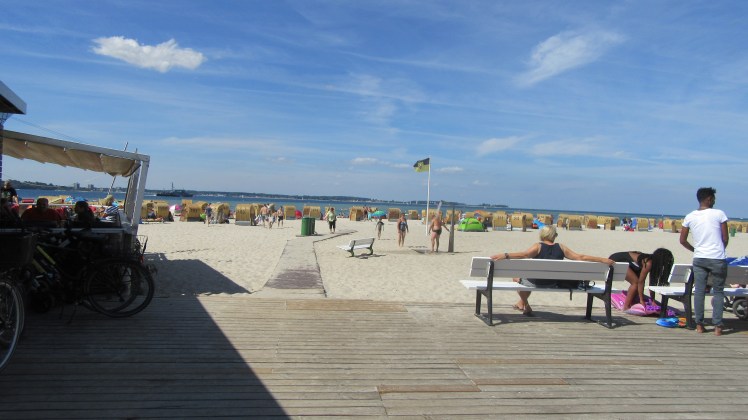
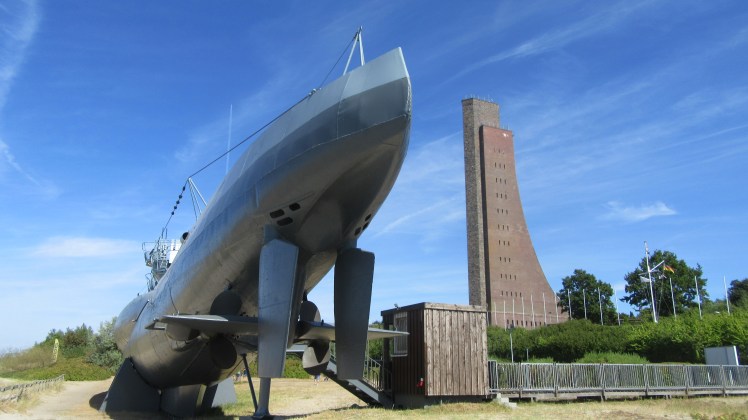
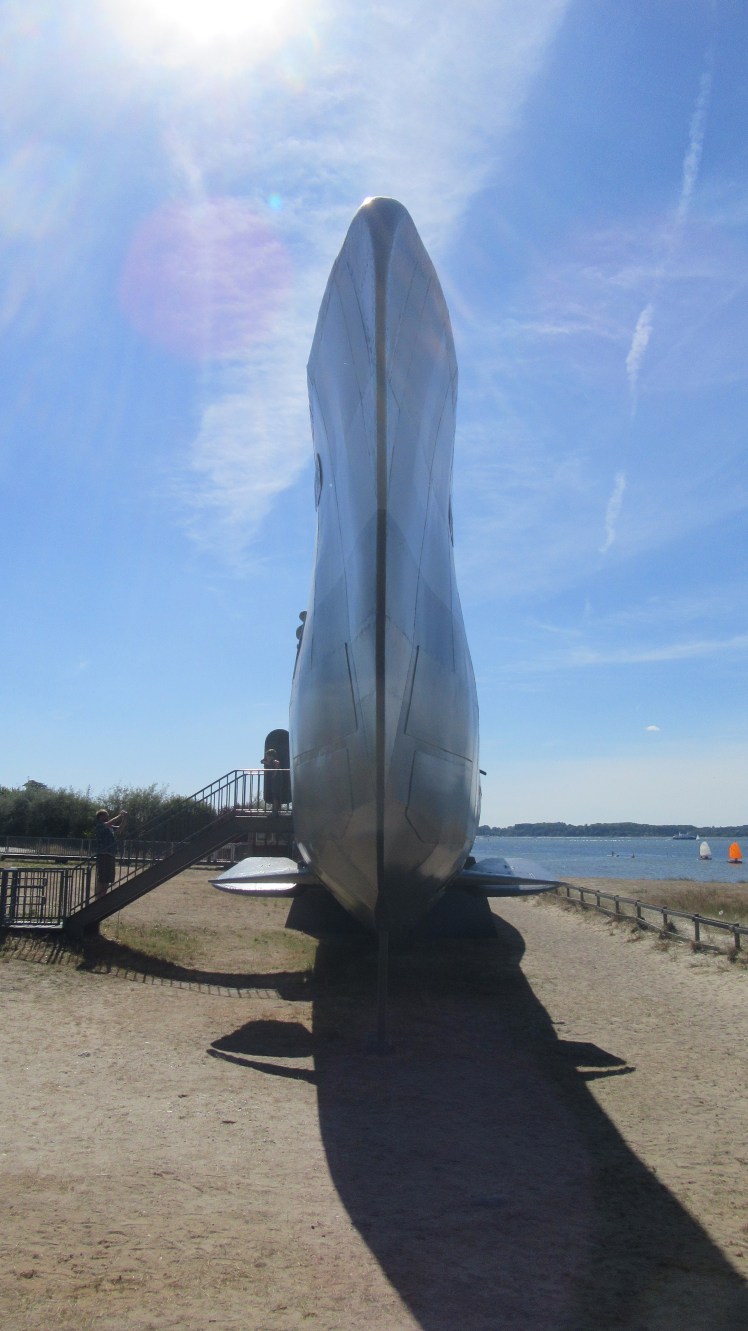
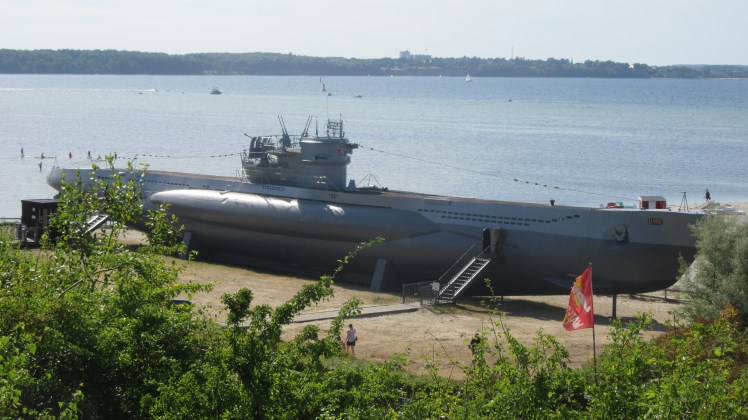
The town of Laboe, northeast of Kiel. Another beach resort town on the Ostsee (Eastern See/Baltic Sea) Another neat but small touristy beach town, with lots of Strandkörbe (beach baskets/beach chairs). (I’m not going to any more beach resorts, I promise!) This town though has 2 neat main attractions besides the lovely beach. It has another original Nazi U-Boat, U-995, and the enormous Sailors Memorial right across the street. Unfortunately, unlike the last U-Boat I visited in Bremerhaven, this U-Boat had a “successful” wartime career, where it sank 5 Soviet Russian ships, and heavily damaged an American cargo ship, which still resulted in loss of lives. All in all, it sank thousands of tonnage of ships and supplies, including a gun boat and an anti-submarine boat. The submarine has a rather comical post-war story though. When the war ended the boat was surrendered to the British. Shortly after they gave it to Norway, and Norway put it to use in their Navy. It was decommissioned in 1965. They then sold it back to Germany for 1 Deutschmark. (appx $0.60 – 60 cents in today’s currency) As a sign of renewed friendship, despite years of Nazi occupation in Norway. It was then refitted to it’s original WW2 appearance, inside and out, and put on large stands right on the beach of Laboe, in 1971 where you can now pay a small fee to go through it. That now makes 3 of the only 4 still existing U-Boats that I have visited… all within just a couple of weeks of each other. Though the 4th isn’t exactly convenient, as it’s located in a museum… in Chicago… in Illinois. Far, far away from here.
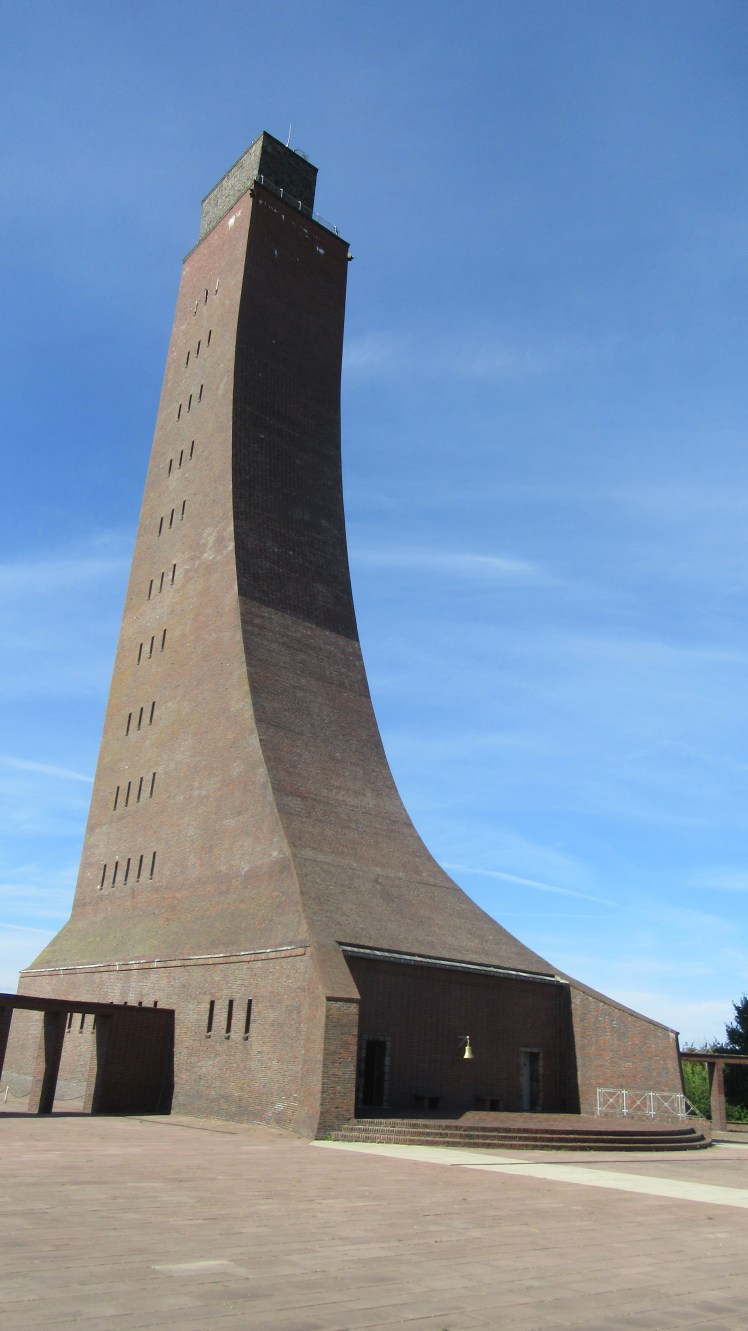
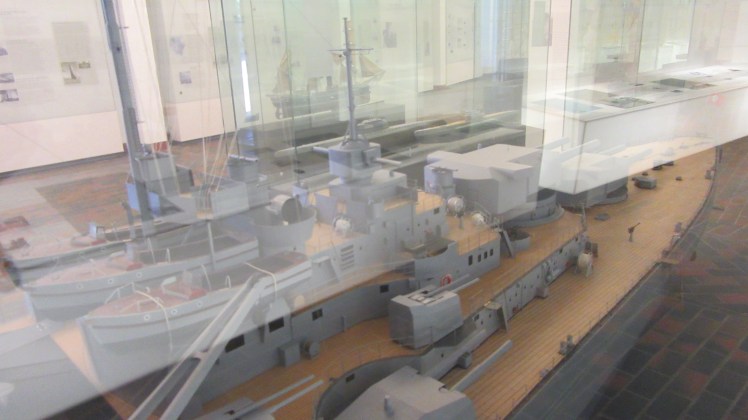
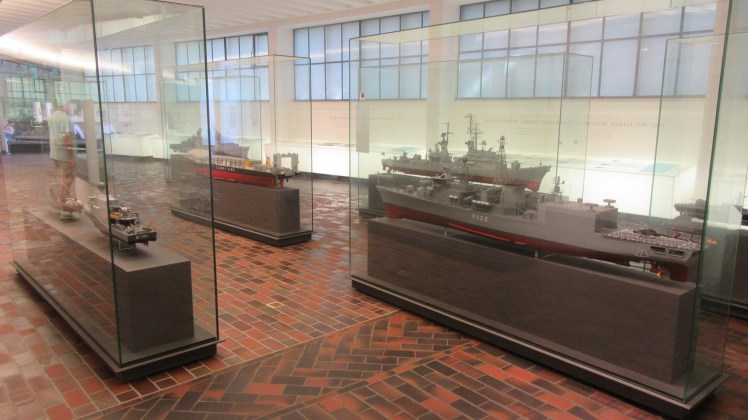
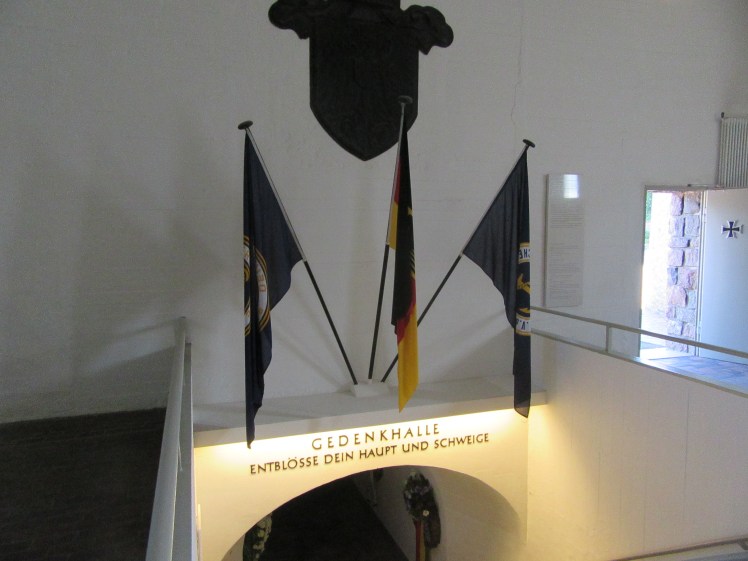
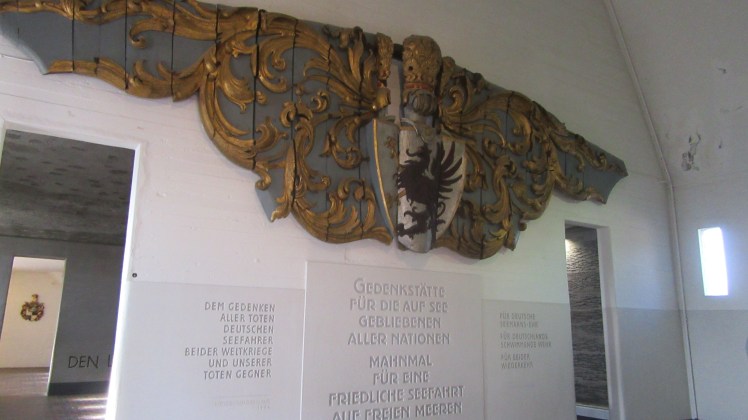
Right across the street is the huge and imposing Sailor’s Memorial. Originally built in 1936, it was dedicated to German soldiers who were lost at see, from combat. In 1945 the German sailors who were lost in WW2 were added, and in 1952 the monument was rededicated to sailors of all nations lost in naval combat. It has some illegally looted items on display, as well as a large semi-circular room with tons of models of boats that were lost during the great wars. From small boats to the massive and mighty battleship Bismarck. Behind the monument is a large empty courtyard. At one end is the large tower, and the other end is this museum. But underneath this courtyard is a large underground circular chamber, a very solemn and dark memorial room. Full of flowers and banners, and wreaths and the flags of dozens of nations line the large circular room. It has all the seriousness of any graveyard or memorial service. There is a long hallway to get down into this room, lined with wreaths and banners each with words of remembrance.
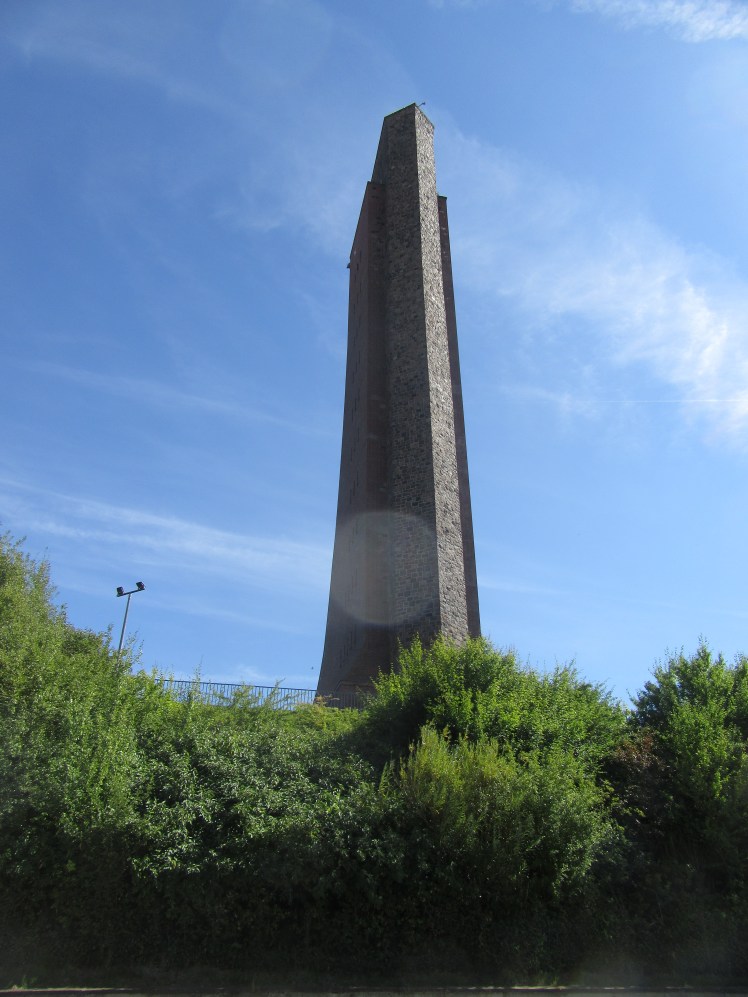
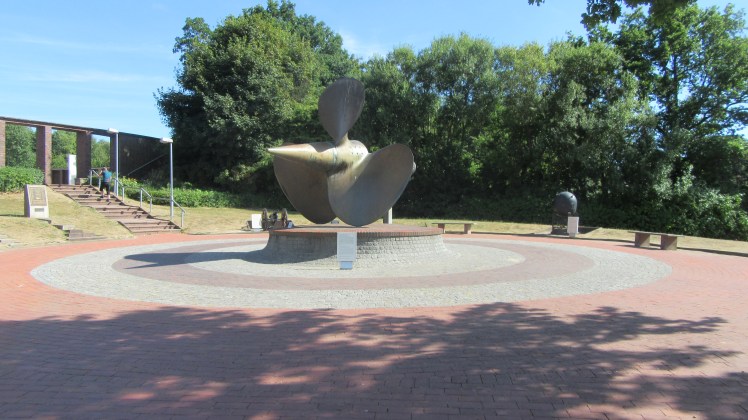
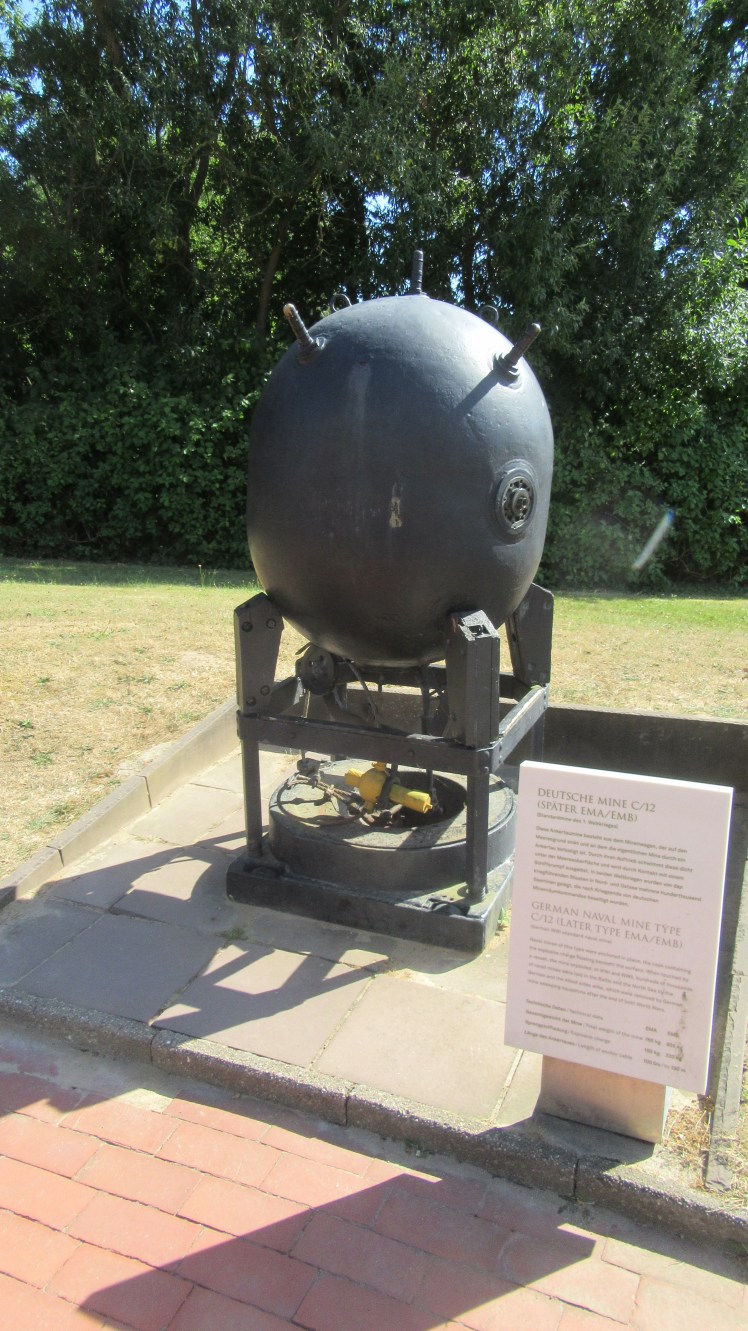
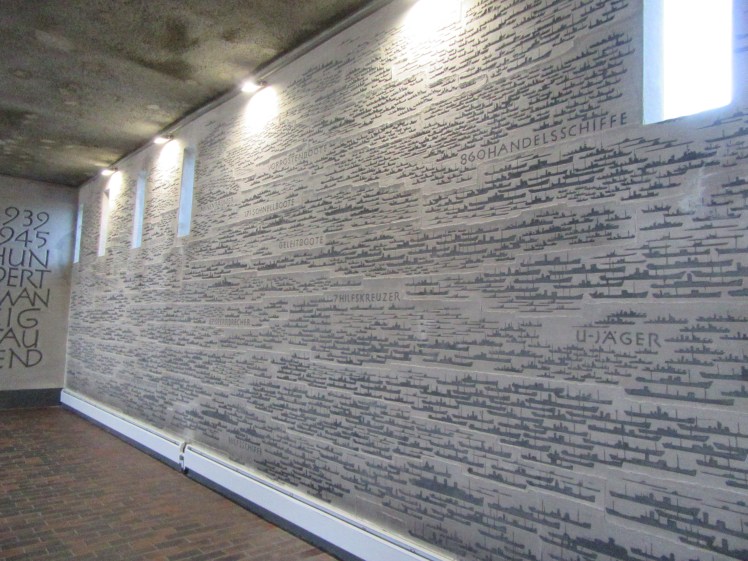
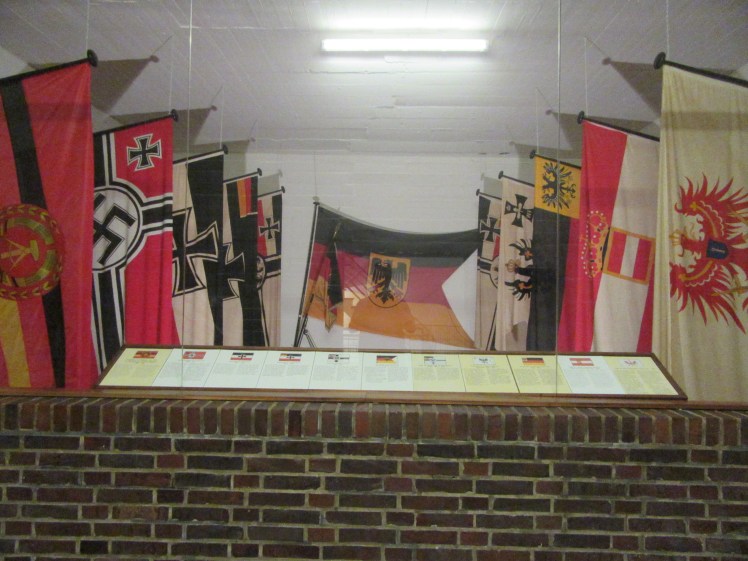
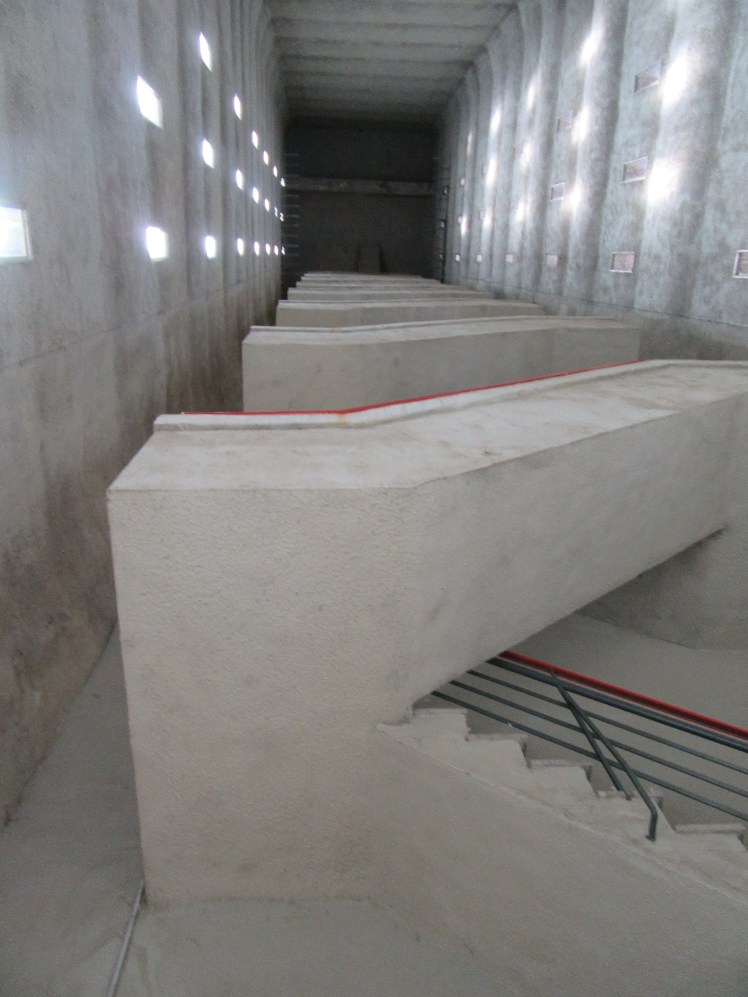
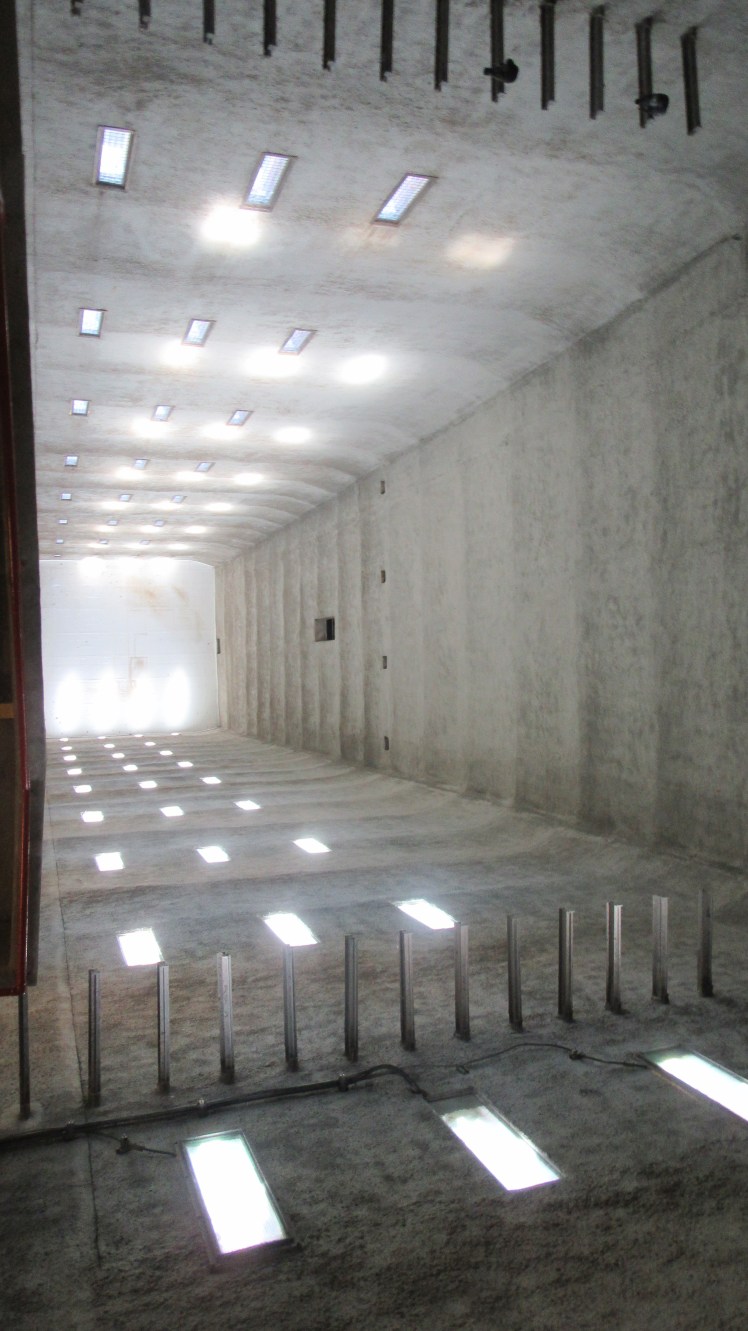
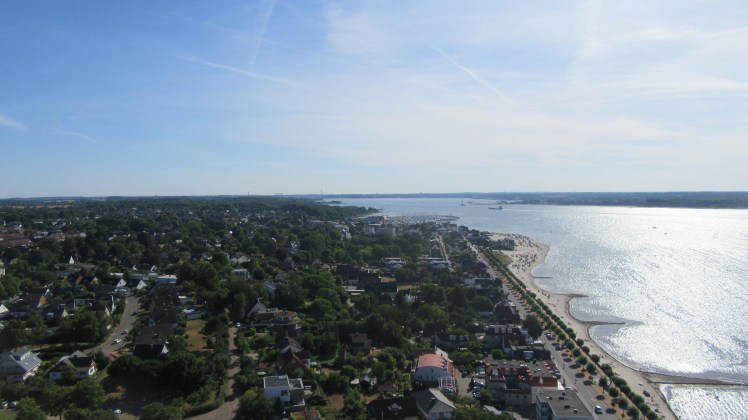
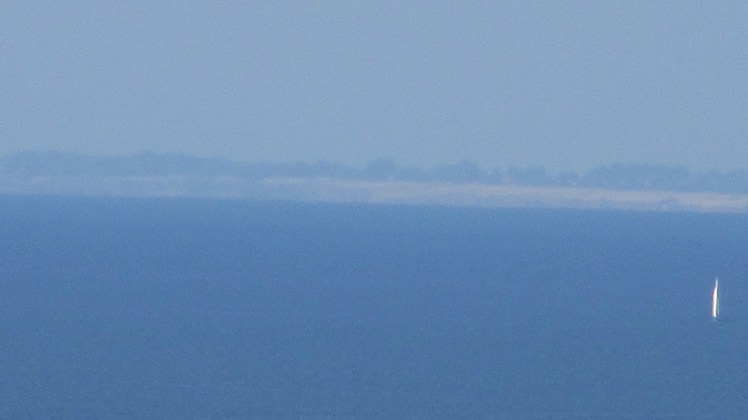
Up above in the tower is more memorials, including depictions of ships lost, (you’ll see in the photos how insane the wars were) and how much was lost. There was logs of lost sailors, and a room of all the flags of Germany’s naval history, from their flag in the 1600’s, even including the flag of the Nazi Kriegsmarine. The main attraction though is the absolutely massive 236 foot tall brick tower that looks over all the lands around. The tower is mainly completely empty save for a set of stairs all the way up and down. I’m not normally afraid of heights, but looking down into the vast chamber from the very top of the stairs was quite nerve wracking. Thankfully there was an elevator that takes you to the top, giving you a slim view of part of Kiel. And on clear days (like today), you can barely just see Denmark far in the distance. Around the base of the memorial is a few small relics, such as a huge propeller from the ship Prinz Eugen. While the wreck of the Prinz Eugen is still visible today in shallow waters of the Kwajalein Atoll in the South Pacific (google it!), one of the propellers was salved by the US Navy in 1977 and donated to the memorial “as a token of friendship and reconciliation.” A couple other nations had made donations of artifacts to the memorial, including a section porthole from a ship (as previously mentioned) illegally salvaged by a team of British divers. Though this was less a donation, and more of a confiscation. All in all, the memorial was very moving, I had no idea any of it existed except for the tower. I just thought going to the tower to see it was all there was, I didn’t even know you could go up it. It was really well done, with the numbers and visible imagery of losses on all sides made clear.
The title of this post is a reference to the 1981 German film ‘Das Boot’ (The Boat) which depicts life aboard a fictional WW2 German U-Boat.






 jonsjourneythroughgermany.com